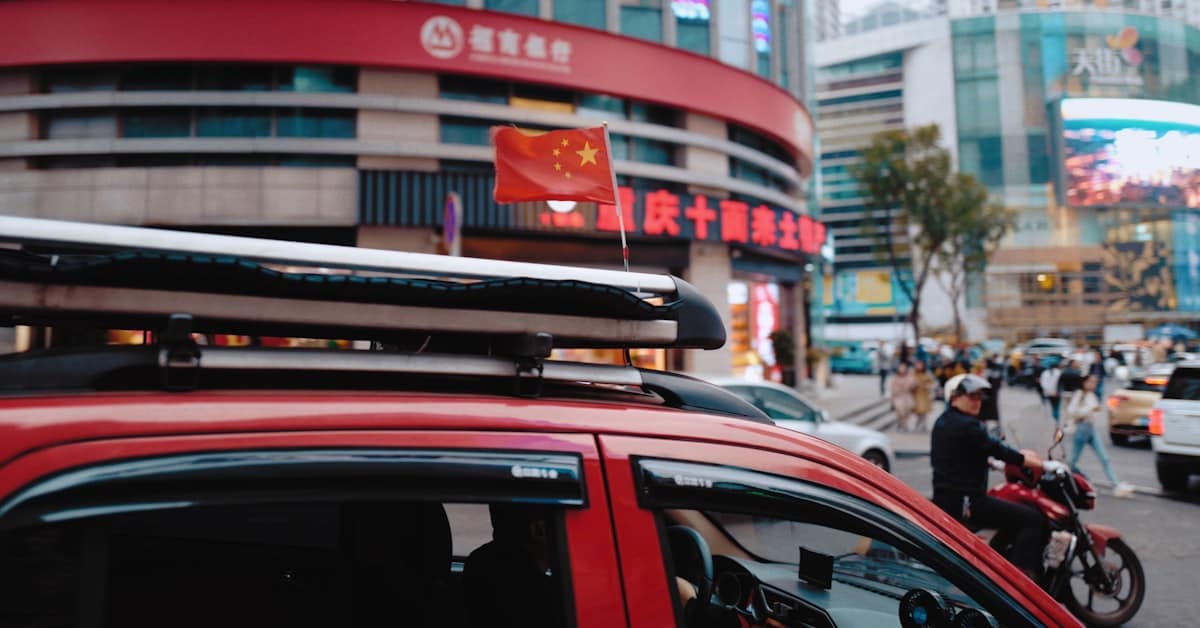

The first thing I ate in Guangzhou was a steamed shrimp dumpling at 7:40am, in a dim sum hall on the second floor of a building that did not look like a restaurant from the street. My host had picked me up from the airport at 6am and driven me here without asking what I wanted, because as far as she was concerned, breakfast in Guangzhou had only one possible answer. The dumpling skin was translucent. The shrimp inside was bigger than I had expected. The tea was bo lei, which is what locals call pu-erh, brought to the table in a clay pot by an aunty who refilled it without speaking.

Day 1 in Guangzhou: Three Hours of Dim Sum and a Walk Along the Pearl River
Yum cha — the morning tea ritual that anchors Cantonese life — is not breakfast in the way I had thought of it. It is a three-hour commitment that drifts into lunch, with carts rolling past your table every two or three minutes and small plates accumulating in a stack that the staff count up at the end to work out the bill. My host knew what to wave through and what to call back. I let her drive. We ate har gow, siu mai, char siu bao, lotus leaf rice, deep-fried taro puffs, custard buns, and three different things I could not name. The total came to about a hundred and ten yuan for two people. We were the youngest table in the room by a long way.
Afterwards I walked along the Pearl River. The promenade runs for kilometres on both banks. I did the south bank from Haizhu Square westward, past the old shipping clubs and the colonial-era postal building. Guangzhou has been a trading port for more than two thousand years and the river still smells like work, not leisure — fuel and warm metal and brackish water. Container ships move through every few minutes.
For dinner I went to Wing Wah Lou near Beijing Road for double-skin milk pudding, which is a Cantonese dessert I had read about for years. It came in a small white bowl, slightly warm, with a layer that holds its shape under the spoon and a custard underneath that does not. Twelve yuan. I had two.
Day 2: Shamian Island and the Long Slow Afternoon Walk
Shamian Island is a small sandbank in the Pearl River where the British and French had their concessions in the nineteenth century. The buildings are still there, plane trees overhead, almost no cars. After two days in central Guangzhou’s heat and traffic, walking onto Shamian was a different climate. I spent four hours doing essentially nothing. Sat on a bench by the water for forty minutes. Drank a cold lemon tea from a vending machine. Watched an older couple practising ballroom dance steps on a flat stone plaza near the old Catholic church.

Lunch was a quarter roast duck from a takeaway shop where the cook split it into pieces with a cleaver in about fifteen seconds, weighed it on a digital scale, and rang it up on a battered calculator that he turned to face me. Forty-eight yuan. I ate it on a bench overlooking the water, with chopsticks I had grabbed from a dispenser by the door.
In the late afternoon I crossed back to the city for tea at a small chayuan in Liwan district. The teamaster, an older man who did not speak any English at all, did the whole gongfu cha sequence for me anyway — small clay pot, three small cups, water just off the boil, first wash discarded, second pour into the cups, the smell of phoenix dancong oolong filling the small room. We sat for an hour. He poured. I drank. He nodded at me each time I emptied a cup. I paid eighty yuan and left feeling like the afternoon had been a small lesson in something I would only fully understand later.
Day 3: Guangzhou to Shenzhen on the Bullet Train, and the City That Did Not Exist Forty Years Ago
The high-speed train from Guangzhou South to Shenzhen North takes thirty-six minutes. I had a window seat, and I spent most of the ride watching the country between the two cities disappear under construction — apartment blocks and factories and elevated roads. There is not much green left between them anymore.
Shenzhen does not look like the rest of China. It looks like a city that decided what it was going to be in the 1980s and has been building it ever since. The street widths are American. The towers are aggressive. The metro signage is the cleanest I have seen in Asia. I came out of Futian station into a plaza the size of a football pitch, with the Ping An Finance Centre — the second tallest building in China — directly overhead.

I dropped my bag at a small hotel in Nanshan and went straight to OCT-Loft, an old industrial zone converted into design studios and cafes. I had been told this was where Shenzhen’s softer side lived. They were right. Brick warehouses, ivy on the walls, a coffee roastery where a woman in her thirties walked me through three different Yunnan single origins before pulling me a hand-brewed cup of one I liked. Forty-five yuan for the coffee. Felt expensive for China. Was probably half what I would pay for the same in London.
For dinner I went to a Cantonese place that a designer at the cafe had recommended. Shenzhen is technically Cantonese-speaking territory, but the city is so full of internal migrants from Hunan, Sichuan, the northeast, Fujian, that the food scene is essentially national. I had steamed grouper with ginger and scallion, stir-fried morning glory with fermented tofu, and a clay pot of rice with sausage and dried mushrooms. One hundred and forty yuan for two people. Better than most of what I had eaten in Guangzhou, which I had not expected.
Day 4: Huaqiangbei and the Tech-and-Skyline Day
Huaqiangbei is the largest electronics market in the world. It is a kilometre of malls stacked into towers, with floors specialising in chips, screens, drones, repair tools, phone cases, lights, batteries, and a hundred other things that go into the devices we use every day. I went because I wanted to see it, not because I needed anything. I came out three hours later with a small folding tripod, a USB-C cable that turned out to be better than any I had ever bought in the West, and a sense of vertigo about how much of the world’s hardware passes through these floors.
The vendors are mostly women, mostly in their thirties and forties, mostly typing into translation apps when foreign buyers walk up. I bought the tripod from a woman who had a baby asleep in a pram next to her stall. She tested it for me three different ways before letting me pay, including holding it up at an angle and clipping a brick onto it to make sure the locking mechanism would not give. Fifty-eight yuan. The same item is sixteen pounds on Amazon.
In the afternoon I went up the Ping An Finance Centre observation deck, which is on the 116th floor and costs two hundred yuan. The view goes from the Hong Kong border in the south all the way to the Pearl River delta industrial sprawl in the north. On a clear day you can see Hong Kong’s hills as a faint blue ridge across the bay. The day I went was not clear. I could see about three kilometres.

Down at street level afterwards I walked the Civic Center area at dusk. Light shows on every facade — the entire Shenzhen skyline is wired for synchronised LED performances on weekends. It is overwhelming and a little ridiculous and also unmistakably the point of the city. Shenzhen is showing you something. The honest thing is to look.
Day 5: The Hong Kong Border at Shatoujiao and the Strange Feeling of Almost Being Somewhere Else
Shenzhen runs right up to the Hong Kong border. In the east, at Shatoujiao, there is a street called Chung Ying Street where the Hong Kong line literally splits the road down the middle — half the shopfronts are Shenzhen, the other half are Hong Kong, and you can walk between them in a single step. Or at least you could, when the access permits were easier to get. The current rules are more complex.

I did not have the permit. I went anyway to the Wutong Mountain area on the eastern side, where the border runs through the hills. There is a hiking trail along the ridge from which you can look down into the New Territories on the Hong Kong side — small villages, fish farms, the start of the Pat Sin Leng ranges. I sat on a rock for half an hour eating a cold bao I had brought with me. A grandmother walking a small dog stopped to ask me where I was from, in Mandarin slow enough that I understood it. We had a short conversation about the weather and her grandson, who lived in Vancouver. She moved on. The dog had not stopped sniffing my shoes the whole time.
Hong Kong from the Shenzhen side has a strange quality to it. You can see it. It is right there. But the line between the two has gotten harder over the years, in ways most travellers do not appreciate until they bump into them. The two cities are inches apart on a map and entire systems apart in practice. I walked back to the Shatoujiao metro station thinking about that — the fact that the building in front of me at any moment could be a country away, even if my eyes told me otherwise.
That evening back in Nanshan I ate at a Sichuan place run by a couple from Chengdu. Mapo tofu, hui guo rou, dry-fried green beans, beer. I paid using WeChat Pay, again, because I had not used cash in Shenzhen at all. If you have not set up mobile payments before you arrive, do it — the WeChat Pay and Alipay setup guide covers what failed for me on my first trip and the things I had to redo.
Day 6: Back to Guangzhou by Train, an Afternoon in Liwan, and the Best Meal of the Trip
I took the 9:14am back to Guangzhou South. Same thirty-six minute ride, opposite direction. By the time I got back to my hotel in Liwan it was not even 11am and the city already felt familiar in a way Shenzhen had not.
I spent the afternoon walking the old Xiguan neighbourhood. The buildings are qilou — shophouses with covered arcades at street level — and many of them still have the original carved doors and tiled roof ridges. I found a small herbal medicine shop where the pharmacist was filling prescriptions from drawers stacked floor to ceiling, a smell of dried roots and bark in the air that I could not place but that immediately made the room feel old. He saw me looking and walked me to one drawer in particular, opened it, held up a thin piece of dried something, and said one word in Cantonese I did not catch. He laughed at my blank face and waved me on.
I had dinner at a Shunde-style place in Tianhe that someone on a forum had described as the best seafood in Guangzhou. I went sceptical. I left convinced. The signature dish was steamed grass carp prepared in a way that I had not eaten anywhere else — almost raw at the centre, the texture of good sashimi but warm, dressed with hot oil and ginger and scallion. Two hundred and ninety yuan for that one fish, which was the most I spent on a single dish on the whole trip. It was the best meal of the trip.
I walked back to the hotel afterwards instead of taking a taxi, partly because I wanted the air and partly because I knew I would not be in Guangzhou again for a while and the city deserved one more pass on foot. The streets at 10pm in Tianhe are full — late-night noodle stalls, families out for an after-dinner stroll, scooters loaded with two or three people each. I walked through the Zhujiang New Town financial district at one point with the Canton Tower lit up pink and white in the distance. It looked like an enormous cocktail straw left standing in the city.
Day 7: One Last Yum Cha and a Late Flight Out
My flight was at 6pm so I had most of the day. I went to the Chen Clan Ancestral Hall first, which is the most ornate Cantonese architecture in the city — carved roof ridges, glazed pottery friezes, woodwork inside that has held up since the late nineteenth century. Twenty yuan to enter. I had it almost to myself for the first hour, until a school group arrived and the noise level went up by an order of magnitude.
Lunch was yum cha again, at a different place this time, because I had decided that if you can have it twice in a week you should. I ordered too much and ate it slowly and was the only person at my table for the entire ninety minutes, which felt like a small failure of the dim sum format until I gave up on it and just let the carts pass.
Logistics for a 7-Day Guangzhou and Shenzhen Trip
- Split: 4 days Guangzhou, 3 days Shenzhen. The cities are different enough that you want time in both, but the high-speed link makes it easy to base in one and day-trip from the other if you prefer.
- Train between them: Guangzhou South to Shenzhen North, 36 minutes, around 75-80 yuan one way. Trains run every few minutes. Book ahead through the WeChat 12306 mini-program if the official site rejects your card.
- Best base in Guangzhou: Liwan or Yuexiu for old neighbourhood character. Tianhe if you want shopping and modern infrastructure. Avoid the airport area.
- Best base in Shenzhen: Futian or Nanshan for metro access. OCT-Loft area for design-conscious cafes and restaurants. Avoid Luohu unless you have a specific reason.
- Hong Kong border: Visiting Hong Kong from Shenzhen needs a separate visa or visa-free entry depending on your nationality. Most foreign travellers can transit through HK without a visa for short stays — check current rules before you arrive.
- Connectivity: Both cities have good 5G everywhere, but Google, Gmail, Instagram, and Western news sites are all blocked. Sort out an eSIM and a working VPN before you land — the eSIM and VPN guide for China walks through what I run and what failed.
- Navigation: Google Maps does not work properly inside China. I used Amap on my Shenzhen days because the metro signage in English is so good that I barely needed it, and Baidu Maps for the Guangzhou hutong-style neighbourhoods where street names confused me. The China navigation app guide covers the trade-offs.
My flight to Hong Kong for my onward connection was forty-five minutes from Baiyun airport. I went through security at 4pm in a queue that took twenty-three minutes and got to the gate with two cups of milk tea and a small bag of egg tarts I had picked up at the airport bakery. The plane was half empty. I sat by the window and watched the Pearl River delta from above as we climbed — the river splitting into the dozens of channels that feed it out to the sea, the cities along the banks blurring into one continuous strip of lights, and somewhere down there a duck shop, a tea master, and a pharmacist in Liwan whose drawer I never figured out.
Photos courtesy of Unsplash