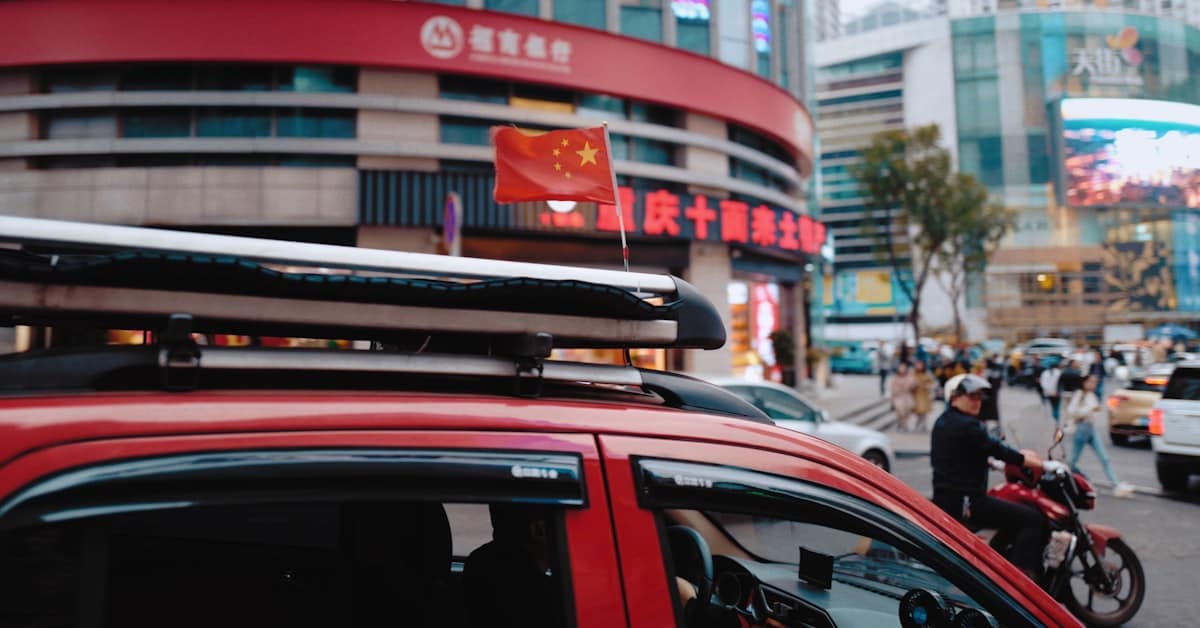

I almost didn’t go. The flight was booked in March, the hotel was booked in April, and by September 20th I was reading every Golden Week warning I could find on the internet and trying to convince myself that canceling was the responsible choice. Eight hundred million domestic trips in seven days. Hotels at three times normal rates. Trains selling out in under a minute. The Forbidden City at five times normal capacity. Every Western travel guide I read said the same thing: avoid October 1-7 entirely.
I went anyway. The flight was non-refundable. This is what actually happened across four days of National Day Golden Week in Beijing and Shanghai – the parts the warning guides get right, and the parts they don’t.

Day 1 (October 1): The Flight In and the Empty Airport
The first surprise was the airport. Beijing Capital International Airport at 2pm on October 1st was nearly empty. Not quiet – empty. The domestic terminals, which I had expected to be at peak density, had maybe a third of the usual foot traffic. The international arrivals hall had four people in front of me at passport control. The taxi queue had three taxis and no queue.
The reason, which I did not understand until later, is that October 1st is the family gathering day of Golden Week – the equivalent of Thanksgiving Day in the United States. Everyone who is traveling has already traveled. The trains ran full on September 30th. The airports were packed on September 30th. By the afternoon of October 1st, the country was already where it was going, and the transit infrastructure was briefly, eerily, empty.
The taxi driver, who spoke no English, navigated to my hotel in twenty-five minutes. The same ride, I would later learn, takes ninety minutes on a normal weekday. The highway was clear. The ring roads were clear. Beijing on October 1st afternoon was the cleanest it would be all week.
The hotel price reality
The hotel – a 3-star business hotel near Dongzhimen, booked in April at 480 yuan per night – was quoting 1,400 yuan per night for walk-in guests on October 1st. The same room. The same hotel. The same breakfast. Three times the price. The front desk woman told me, in slow English, that October 1-3 was the peak and that rates would drop on October 5th. She was right. By October 5th the same room was 620 yuan for walk-in guests.
I had booked in April. I paid 480 yuan per night for all four nights. The lesson, which I had read in guides but not internalized, is that Golden Week pricing is brutal for last-minute bookings and irrelevant for bookings made 5+ months ahead. If you’re going to do Golden Week, commit early or don’t commit at all.

Day 2 (October 2nd): The Forbidden City at Peak Density
I had booked the Forbidden City 7 days ahead, which is when tickets release. The 8:30am entry slot – the first of the day – was the only one still available when I checked at 9am Beijing time on the booking day. It sold out in 90 seconds. By the time I checked again at 9:05am, the entire day was gone.
I arrived at the Meridian Gate at 8:15am. The queue was already 200 meters long. By 8:30am when the gates opened, it was 400 meters. By 8:45am when I got through security, the central courtyard was already filling. By 9:30am – one hour after opening – the Hall of Supreme Harmony courtyard was shoulder-to-shoulder, and the queue to peer through the doorway into the throne room had stopped moving entirely.
I left at 11am. I had seen the three great halls from the outside, walked the western palaces at 30% of normal pace, and given up on the Treasure Gallery. The crowd density was not unsafe – the staff managed it well – but it was physically uncomfortable. The marble courtyards, which I had been told reflect heat in summer, were reflecting something else in October: noise. The sound of several thousand phone conversations in Mandarin, overlapping, was a physical pressure.
The thing nobody mentions about Golden Week crowds
The crowds are not the worst part. The worst part is the pace. A normal Forbidden City visit takes 3-4 hours at museum pace – stopping to read signs, taking photos, sitting on benches. A Golden Week Forbidden City visit takes 3-4 hours at queue pace – shuffling forward in increments, unable to stop without being bumped, unable to read signs because someone is always standing in front of them.
You see less. You learn less. You remember less. The photos are full of strangers’ shoulders and phone screens. The experience is technically “I went to the Forbidden City” but the actual content of the visit is maybe 20% of what it would be on a normal day.

Day 3 (October 3rd): The Train I Almost Missed
The Beijing-Shanghai high-speed train was the part of the trip I had been most worried about. Booking had opened 15 days ahead at 9am Beijing time. I had used Trip.com’s auto-booking feature, which fires the request the moment the window opens. The second-class tickets sold out in 47 seconds. I got one. The first-class tickets sold out in 31 seconds. The business-class tickets sold out in 12 seconds.
The train was at 7:15pm from Beijing South. I arrived at the station at 6:30pm. The station was at capacity – every seat in the waiting hall was taken, every food vendor had a 20-minute queue, the floor was lined with people sitting on luggage. I stood for 45 minutes.
The train itself was fine. The seat was comfortable. The journey took 4 hours 28 minutes. We arrived in Shanghai Hongqiao at 11:43pm. The Shanghai metro was still running – barely; the last train on Line 2 was at 11:55pm and I made it with four minutes to spare. The hotel, which I had also booked in April, was 320 yuan per night. The walk-in rate that night was 980 yuan.
The booking math that actually works
If you must travel during Golden Week – and sometimes you must – the booking math is brutal but simple:
- Trains: 15 days ahead at 9am Beijing time. Use Trip.com’s auto-booking. Do not try to book manually – popular routes sell out in under a minute
- Hotels: 5+ months ahead for reasonable rates. 1-2 months ahead for double rates. Walk-in for 3x rates
- Flights: 2-3 months ahead. Flight prices spike 50-80% during Golden Week but don’t sell out as fast as trains
- Attraction tickets: 7 days ahead for the Forbidden City, Terracotta Warriors, Zhangjiajie. Same-day is sometimes possible at less popular sites
For the broader October routing logic – including why October 8-25 is the actual sweet spot and Golden Week should be avoided if you have any flexibility – the China in October guide covers the full picture. I had read it. I went anyway. The flight was non-refundable.

Day 4 (October 4th): Shanghai on the Back End
Shanghai during Golden Week is a different problem from Beijing. The major attractions – the Bund, Yu Garden, Nanjing Road – are at peak density from 10am to 10pm. But Shanghai has something Beijing doesn’t: a back-end of neighborhoods that absorb overflow. The French Concession, Xintiandi, the smaller streets off Huaihai Road – these were crowded but walkable. The Bund was unbearable. The streets two blocks inland were fine.
I spent the morning at the Bund (arriving at 7:30am, before the crowds, for 90 minutes of usable photography light and maybe 30% of peak density). I spent the afternoon in the French Concession, sitting in cafes and walking the side streets. I spent the evening back at the Bund – which was a mistake. The evening crowd on the Bund during Golden Week is the single densest crowd I have ever been in, including concerts and sporting events. Getting to the railing for the classic Pudong photo took 12 minutes. Getting out of the crowd took another 15.
The thing that worked
The early mornings. Every Golden Week day, I was out of the hotel by 6:30am. From 6:30am to 9:30am, the major attractions were at maybe 40% of peak density. The Forbidden City at 8:30am was crowded but walkable. The Bund at 7:30am was nearly pleasant. Yu Garden at 8am (when the shops were opening but not yet busy) was the single best hour of the trip. By 10am every day, the crowds had arrived, and by 11am I was back at the hotel or in a cafe, waiting for the afternoon to pass.
The pattern: 6:30am to 10:30am for sightseeing, 10:30am to 4pm for indoor activities (museums, long lunches, hotel rest), 4pm to 7pm for second-round sightseeing at secondary sites, 7pm onwards for food and night markets. This is the opposite of a normal China trip pattern, where the middle of the day is for major outdoor attractions. During Golden Week, the middle of the day is for shelter.
What I’d Do Differently
I would not do Golden Week again if I had any flexibility. The math doesn’t work. The hotels cost 3x. The trains sell out in under a minute. The attractions are at 3-5x normal capacity. The food is the same. The weather is the same as October 8-25, which costs half as much and has a third of the crowds.
But if I had to do it again – if the flight was non-refundable, if the dates were imposed by someone else’s schedule, if the only alternative was not going to China at all – the things that worked were:
- Book everything 5+ months ahead. The hotels, the trains, the attraction tickets. Do not leave anything to the last minute
- Be out of the hotel by 6:30am every day. The 6:30-10:30 window is the only usable sightseeing window
- Avoid the T1 attractions (Forbidden City, Great Wall, Terracotta Warriors) entirely. They are at their worst. They will be there on your next trip
- Pick tier-2 destinations instead. The second-tier cities get domestic crowds but not the international tourist crush
- Stay in business districts, not tourist districts. Business travelers go home during Golden Week; their hotels have availability and don’t spike as much
Leaving on October 5th
I left on October 5th, two days before the official end of Golden Week. The flight out of Shanghai Pudong was at 11am. The airport was busy but manageable. The check-in queue was 25 minutes. The security queue was 15 minutes. The immigration queue was 10 minutes. All of these would have been longer on October 6th or 7th, when the return leg of Golden Week peaks.
The two days I cut – October 6th and 7th – would have been the worst of the trip. I had been told this by the front desk woman at the Beijing hotel, who had worked through three Golden Weeks and said the last two days were when the return-leg crowds hit every transit hub simultaneously. I took her advice. I changed my flight. The change fee was 800 yuan. The two days I would have spent in Shanghai on October 6-7 would have cost me more than 800 yuan in hotels, food, and the time spent standing in queues.
The plane took off on time. I fell asleep before the seatbelt sign turned off. I woke up somewhere over Inner Mongolia, looked out the window at the Gobi stretching to the horizon, and thought about the front desk woman’s advice, which had been, in its entirety: “Leave early. Everyone leaves late.”
Photos courtesy of Unsplash.