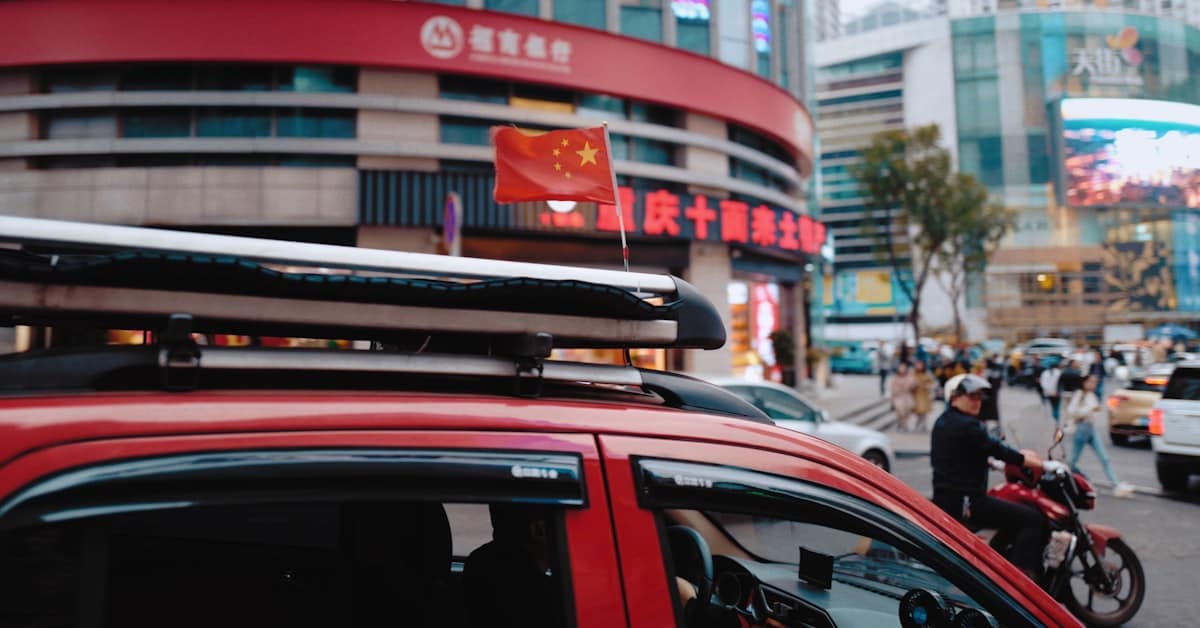

The Forecast Said 60% Chance of Rain
I should have checked the 40%. That was the part without rain, and it lasted exactly until I got off the cable car at the top of Tianzi Mountain. Then the clouds came in like someone pulled a curtain across the entire valley, and everything I’d traveled nine hours to see disappeared.
I’d arrived in Zhangjiajie the afternoon before on a train from Changsha — four and a half hours, second class, 228 yuan. The seat next to me was empty, which I took as a good sign. It wasn’t. It was because the morning train had been cancelled due to weather, and everyone who’d booked that one got rebooked onto later departures. The train was half empty because the other half was on an earlier one, already stuck at Zhangjiajie West station waiting for a bus that wasn’t running.
I’d read about Zhangjiajie before — the guide on this site had warned about peak season crowds and the glass bridge ticket situation. What it didn’t prepare me for was the weather. June in Hunan is rain season. Not the dramatic thunderstorm kind. The low, grey, persistent kind that turns visibility from kilometers to meters in about twenty minutes.
The Cable Car and the Sudden White
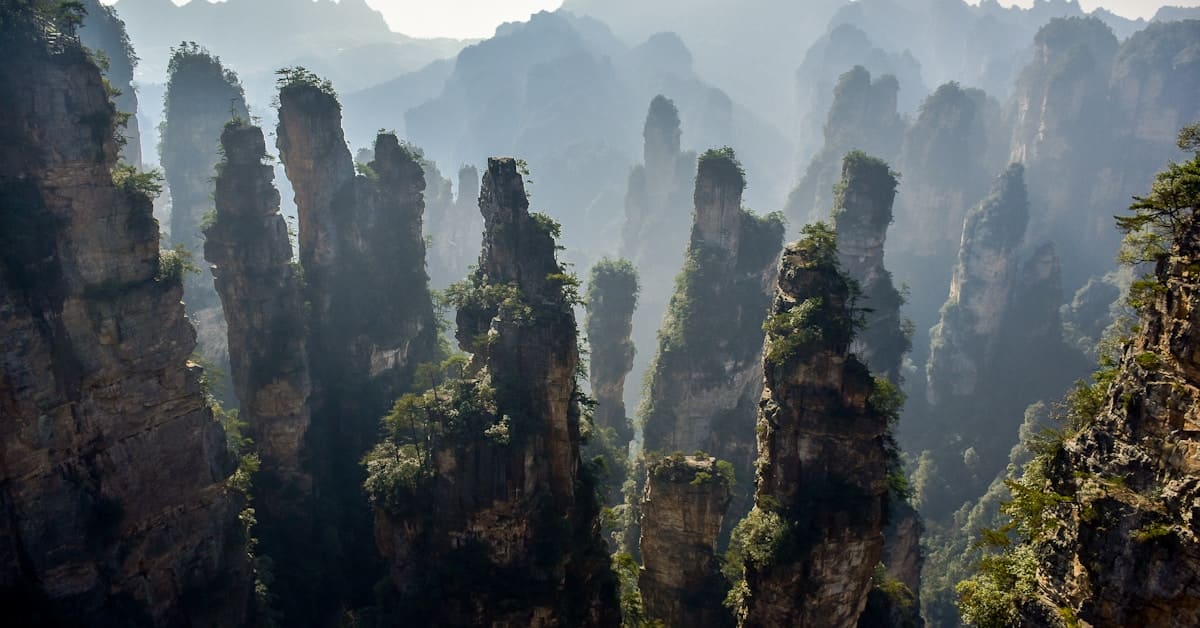
Tianzi Mountain cable car costs 72 yuan one way. The ride takes about seven minutes. For the first four, I could see the sandstone pillars — the ones that inspired the floating mountains in Avatar, the ones that are on every tourism poster for Hunan Province. They were exactly as dramatic as the photos. Taller than I expected, thinner, closer together, like a forest made of rock instead of wood.
Then the fog hit. Not gradually — like a wall. One second I could see the valley floor. The next second I could see the inside of a cloud. The cable car kept moving. The pillars were still there, I knew, but they might as well have been on a different continent.
At the top, I stood on the viewing platform with about thirty other people, all of us staring at white. A Chinese couple next to me was taking selfies with the fog behind them. They looked happy. I was not.
Day One: The Walk That Shouldn’t Have Worked
I had two days in the park. Day one was supposed to be Tianzi Mountain in the morning and Yuanjiajie (the Avatar pillar area) in the afternoon. That plan lasted until about 10:15am when it became clear the fog wasn’t lifting.
I walked the trail from the Tianzi summit toward the Helong Park area instead. The trail is paved — Zhangjiajie’s trails are mostly paved walkways and stairs, which feels wrong until you realize the park gets 30 million visitors a year and unpaved trails would be mud rivers in the rain. The rain was light, just enough to make the stone steps slippery and the handrail cold.
The strange thing: the fog made the walk better. Not because I could see anything — I couldn’t — but because the sounds changed. Water dripping off leaves. My shoes on wet stone. Bird calls that sounded closer than they were because the fog compressed the acoustic space. Every now and then the fog would thin for five seconds and a pillar would materialize, grey and close, and then vanish again. It was like the mountain was breathing.
I walked for about two hours. I passed maybe fifteen people. On a clear day, that trail would have had two hundred. The fog had driven everyone into the restaurants and gift shops at the summit, and I had the path mostly to myself in one of China’s most crowded national parks. That’s the thing nobody tells you about Zhangjiajie in the rain — the crowds thin out faster than the fog lifts.
The Glass Bridge: I Couldn’t Look Down Even If I Wanted To
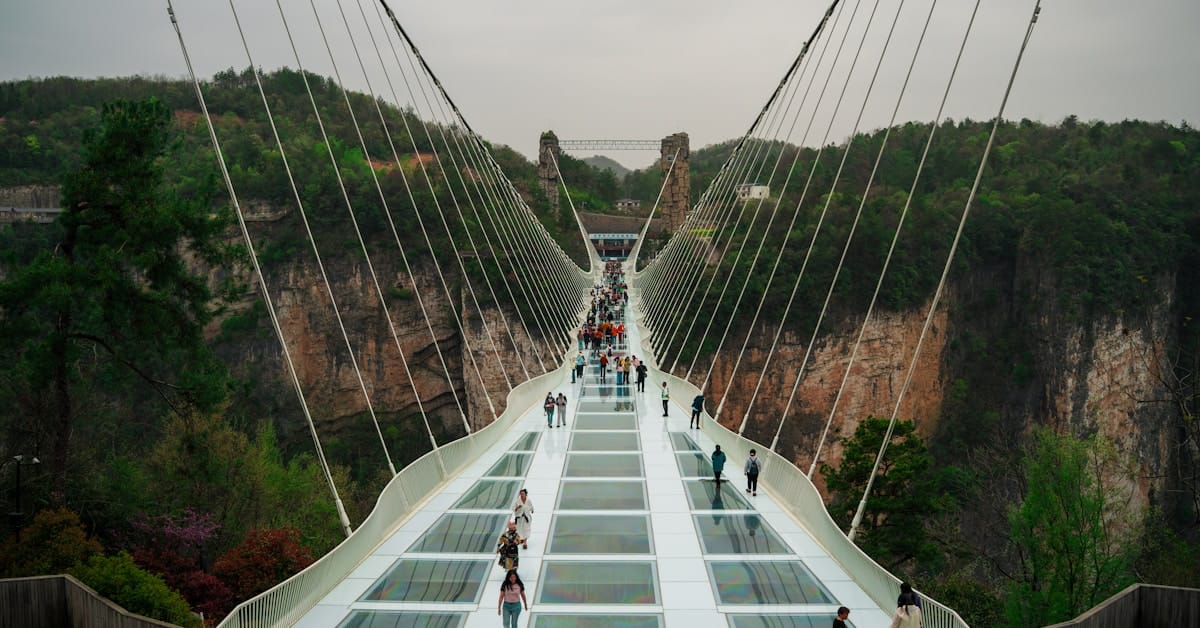
I went to the Zhangjiajie Glass Bridge the next morning. Entry is 141 yuan, and you need to book a time slot — the WeChat mini-program ticket system works for foreigners with passports now (as of June 2026).
The bridge is 430 meters long, suspended 300 meters above a canyon. On a clear day, looking down through the glass floor is meant to be terrifying. On my day, looking down through the glass floor revealed… fog. Dense, white, impenetrable fog. I could see the bridge deck. I could not see the canyon floor. Or the walls. Or anything below the railings.
This made the glass bridge experience surreal instead of scary. I walked across it like I was walking on a road to nowhere — the bridge just ended in white on both sides. The people ahead of me disappeared after about fifty meters. I could hear their footsteps but not see them. Some kids were running and their voices echoed off nothing I could identify.
Would it have been better on a clear day? Probably. Would I trade the experience? No. Walking across a glass bridge into a void is something you don’t get to do often.
Day Two: The Fog Broke for Forty Minutes
I woke up on day two to the sound of rain on the hotel window. Same forecast. Same grey. I checked out, left my bag at the hotel front desk, and went back to Yuanjiajie — the area I’d missed the day before because the fog had eaten it.
Yuanjiajie is where the actual Avatar pillar is. The South Sky Column — that’s the one that the movie designers used as reference. The viewing platform for it is called Avatar Hallelujah Mountain, which is a real name that someone actually approved.
I got there at 8:45. Still foggy. I sat on a bench and ate a steamed bun I’d bought from a vendor near the bus stop. Three yuan. Cold. Good enough.
At 9:20, the wind shifted. I felt it before I saw anything — a push of cooler air, then the fog started tearing, like wet cotton being pulled apart. A pillar appeared on my left. Then another. Then the whole valley opened up, and for forty minutes, I saw Zhangjiajie the way it looks in the photos.
The pillars were closer together here than at Tianzi Mountain. The vertical drops were more extreme — you could see the trees growing out of cracks in the rock, tiny and persistent, hundreds of meters above the ground. The Avatar pillar itself is narrower at the top than at the base, which shouldn’t be structurally possible but clearly is. It looks like it’s defying gravity because it more or less is.
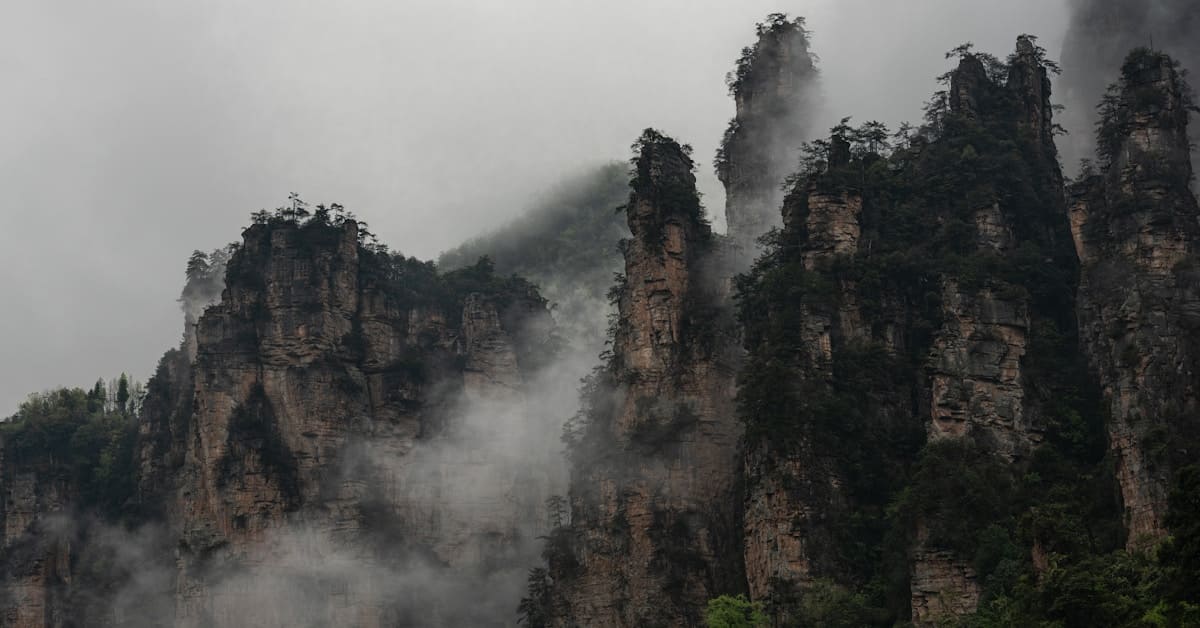
I took about sixty photos in those forty minutes. I know because I counted later. Then the fog rolled back in, slowly, like it was returning from a break, and the valley closed again.
The woman next to me on the platform — a solo traveler from Guangzhou — turned and said something in Mandarin that I didn’t catch. I shrugged. She pointed at the fog, then at her phone camera roll, and smiled. That part I understood. We’d both gotten our forty minutes. That was enough.
Going Down: The Elevator That Defies Explanation
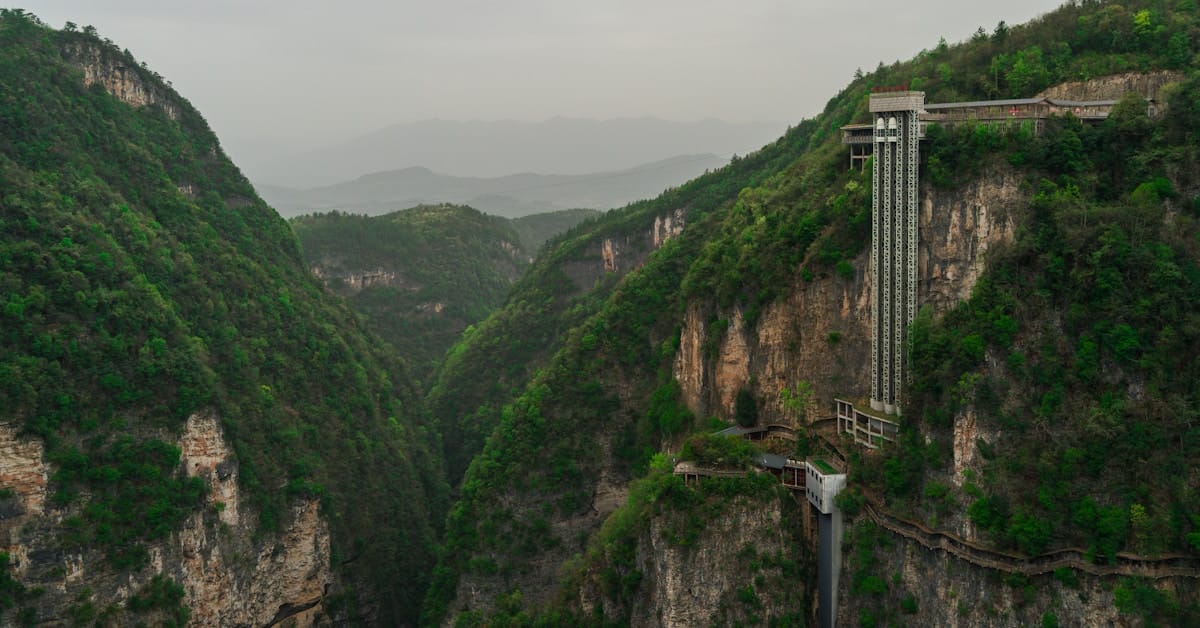
The Bailong Elevator
I took the Bailong Elevator down — 72 yuan, 326 meters, the world’s tallest outdoor elevator. It’s a glass elevator bolted to the side of a cliff. On a clear day, the view is supposedly spectacular. In the fog, it was a glass box descending through white. I could see the cliff face for about five seconds at the bottom before the elevator entered the lower station. That was the whole visual payoff.
Honestly, the elevator is more impressive as an engineering fact than as a visual experience — 326 meters of elevator shaft drilled into a sandstone cliff. Just think about that while you’re standing inside it. It helped that I couldn’t see the drop.
What I’d Do Differently
I’d book three days instead of two. With rain in Zhangjiajie, you need buffer time. The first day might be a washout. The second might give you a window. The third is your insurance. I squeezed everything into two days and it worked, but only because I got lucky with those forty minutes at Yuanjiajie.
I’d also bring better shoes. My trail runners were fine on the paved paths but useless on the wet stone steps — the soles were too hard and I slipped twice. A pair of hiking shoes with soft rubber would have been worth the luggage weight. I’d picked up the same lesson on the Guizhou waterfall trails a few months earlier, but somehow I’d forgotten it.
The other thing: the park bus system is confusing if you don’t read Chinese. The route maps at each stop are only in Chinese, and the buses don’t announce stops in English. I got on the wrong bus once and ended up at the Golden Whip Stream entrance instead of the cable car station — a 40-minute detour. Not a disaster, but it ate into my fog-free window.
I left Zhangjiajie on the 5:30pm train back to Changsha. My shoes were still damp. My jacket smelled like wet rock and something vegetal — the forest, I think, or the moss on the trail railings. I fell asleep before the train left the station and woke up somewhere past Yiyang, the compartment dark, the rain on the window reduced to a light tapping.
The forty minutes of clear view at Yuanjiajie were the best forty minutes of scenery I’ve seen in China. The rest of the time — the fog, the wet stone, the sounds I couldn’t see the source of — that was something else. Not better, not worse. Just different, and worth the soaked shoes.