
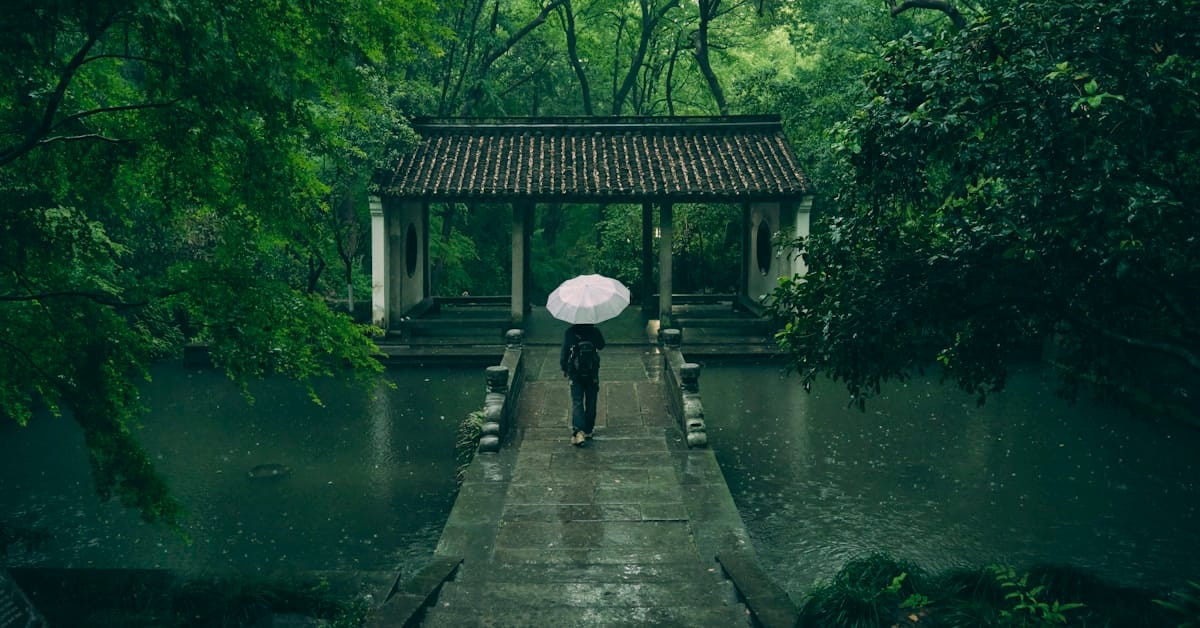
The rain started before I did. I opened the curtains in my hotel room at 6:30am and West Lake was a grey sheet of water falling on water. The willows along the shore bent under it. A single umbrella moved along the Su Causeway — someone either very committed or very lost.
I had two days in Hangzhou and the forecast said rain for both of them. I put on my jacket and went outside anyway.
6:45am on the Su Causeway and Nobody Was There
The Su Causeway is a 2.8km path that cuts across the western edge of West Lake. In good weather it is one of the most photographed spots in China. In rain, it is empty. I walked the entire length and passed seven people. Seven. On a landmark that sees 10,000 visitors on a clear day.
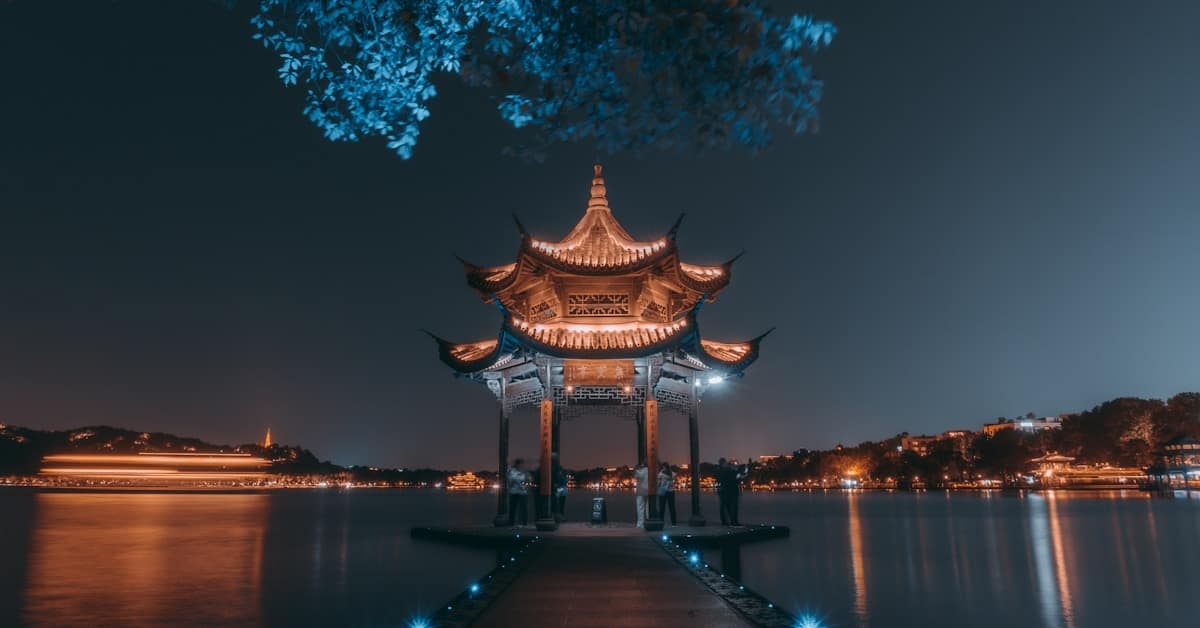
The rain was not dramatic. It was the steady, thin kind that soaks you slowly enough that you do not notice until your sleeves are heavy. The lake was flat. The hills on the far side were a wash of grey-green. Every few hundred meters a small pavilion appeared, and I stopped at each one to shake the water off my arms and look at the lake from a different angle.
By 8:30am the rain thinned. The tour groups appeared in clusters of twenty, each following a guide with a small flag. I walked faster to stay ahead of them.
Breakfast on Hefang Street
I left the lake and walked to Hefang Street, the old commercial road that runs south from West Lake. It was early enough that half the shops were still rolling up their metal doors. I ate a bowl of wonton soup at a place with four stools and a steamer the size of a washing machine. 12 yuan. The dumplings were pork and chive, the broth clear and peppery. I ate it standing because the stools were full of old men reading newspapers.
The Tea Hill Above the City
Longjing Village sits in the hills west of the lake, about 20 minutes by taxi from the city center. I went because the rain was supposed to be good for tea bushes — something about the mist making the leaves tender. I am not sure that is botanically accurate, but the tea farmer who told me seemed confident.
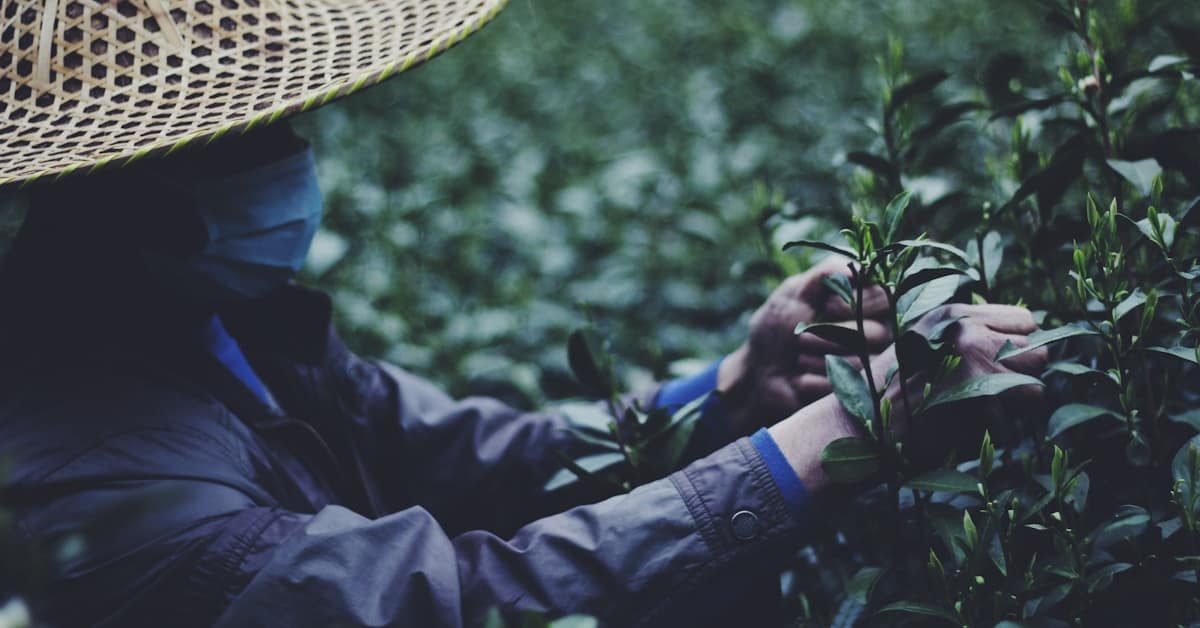
I paid 30 yuan for a tea tasting at a farmhouse. The farmer brewed three rounds of the spring Longjing in a glass tumbler — the leaves stand upright in the water, which he said means it is good quality. The tea was grassy and sweet and nothing like the Longjing I had bought at home in a tin. Of course it was not. I bought 50 grams for 80 yuan, which I later learned was about half the tourist-trap price. I used [WeChat Pay](https://www.dragonroam.com/china-travel-essentials/money-payment/how-to-set-up-wechat-pay-alipay-with-a-foreign-credit-card-2026-updated/) to scan the QR code on the table, because he did not deal in cash.
Getting Lost in the Wet Alleys Behind Lingyin Temple
Lingyin Temple is Hangzhou’s biggest Buddhist temple and one of the most visited in China. I arrived at 2pm and the parking lot was full of tour buses. I paid the 75 yuan entrance fee, walked through the main hall, and left within forty minutes. The temple was impressive but I could not hear myself think over the noise of three hundred people photographing the same statue.
Behind the temple, a series of stone paths leads up into the hills. The Feilai Feng grottoes — Buddhist carvings in the cliff face dating to the 10th century — were quieter. I followed a path past the grottoes that kept going uphill. The rain had turned the stone steps into a shallow stream. I climbed for twenty minutes, passed a small shrine with incense still burning, and found myself on a ridge overlooking the temple complex below. The tour groups were tiny colored dots on the temple roof. I could not hear them.
Day Two: The Lake Before the City Woke Up
I set my alarm for 5:15am. The rain had stopped overnight and the air was that specific post-rain clean that makes you breathe deeper without meaning to. I walked to Broken Bridge — the one from the legend about the white snake — and stood on it alone. The lake was mist. The causeway was a line of dark trees cutting through white. A single scull boat moved across the water, the rower standing at the back, pushing one oar.
I sat on the bridge for twenty minutes. Nobody joined me until 6am, when a group of elderly residents arrived for their morning exercises — tai chi, fan dance, and one man walking backwards along the lakeside path with the focus of someone who had done it every morning for thirty years.
The Noodles That Saved the Afternoon
By 2pm the rain was back. I ducked into a noodle shop near the Zhejiang Museum — a place with laminated menus and fluorescent lighting that I would have walked past on a sunny day. The noodles were in a pork bone broth with mushrooms and bamboo shoots. 22 yuan. I ate two bowls because the first one disappeared before I tasted it.
The [regional food guide](https://www.dragonroam.com/food-dining/chinese-regional-food-guide-8-cuisines-travelers/) I had read before the trip mentioned Hangzhou’s sweetness — the food here leans sweeter than anywhere else in China. It was true. Even the pickled vegetables on the table had a sugar edge.
Logistics
- Train: Shanghai Hongqiao to Hangzhou East, 45–60 minutes, 73 yuan second class. Every 10 minutes during peak hours.
- West Lake: Free. Open 24 hours. The Su Causeway is best before 8am or after 6pm.
- Lingyin Temple: 75 yuan (includes Feilai Feng grottoes). Open 7am–6pm.
- Longjing Tea Village: Free to visit. Tasting 30–50 yuan. DiDi from West Lake about 25 yuan.
- Hotel: Stay near West Lake (not the train station). I paid 280 yuan/night for a basic room 5 minutes from the lake.
- Connectivity: The [eSIM/VPN guide](https://www.dragonroam.com/china-travel-essentials/internet-policy/the-ultimate-guide-to-esims-and-vpns-in-china-how-to-stay-connected-from-day-1/) kept my maps working through the whole trip.
I left on the 6pm train back to Shanghai with tea in my bag and wet shoes in a plastic bag. The rain had not ruined anything. It had given me West Lake with nobody on it, and that was worth a pair of soaked canvas sneakers.