

The Ticket Counter Where Nobody Spoke English and Neither Did I
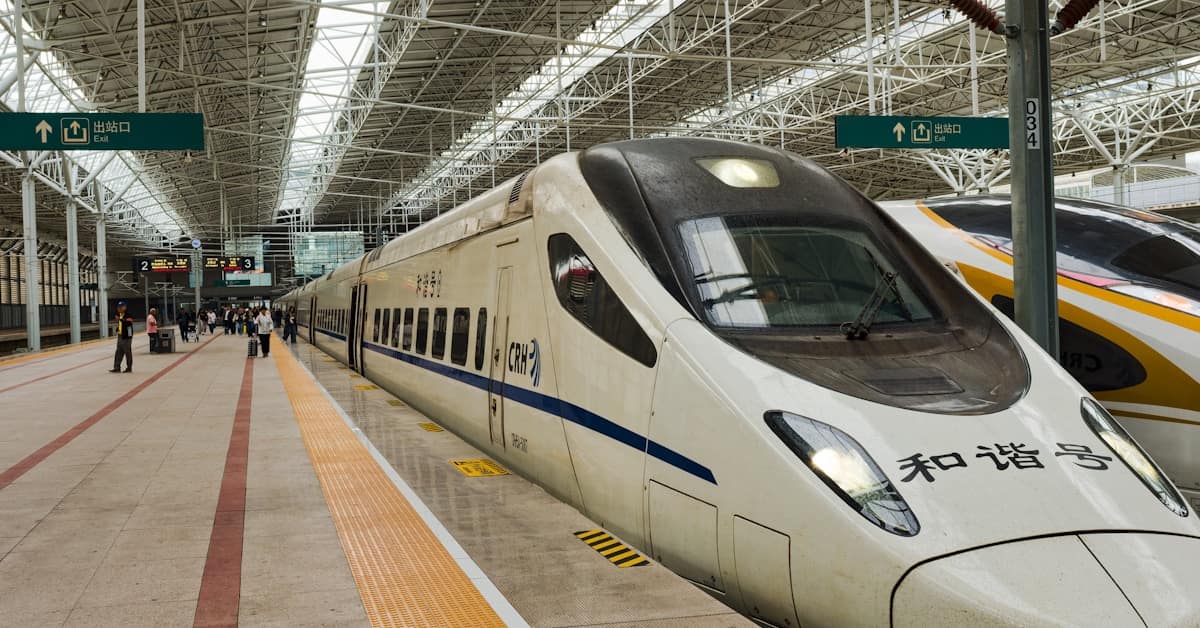
I stood at the Chengdu East Railway Station ticket counter at 7:15am, trying to buy a ticket to Jiuzhaigou. The woman behind the glass looked at me, I looked at her, and we both realized we had no common language. I showed her my passport. She typed something, shook her head, and pointed at a sign I couldn’t read. Behind me, the queue grew. A man in a business suit sighed audibly. I stepped aside, defeated, and spent the next forty minutes figuring out how to buy the same ticket on my phone while sitting on a plastic chair near the station entrance.
That was my last time buying a train ticket at a counter in China. Everything since then — high-speed trains, attraction tickets, even bus passes — I’ve booked through WeChat mini-programs. The learning curve is real. The interface is mostly in Chinese. But once I figured out the pattern, it took less time than standing in line, and it never required me to pronounce anything correctly to a human being.
What Is a WeChat Mini-Program?
Apps Inside an App
A mini-program is a lightweight app that runs inside WeChat. No separate download, no app store, no installation. You open WeChat, search for the mini-program by name, and it loads. It’s like a web app that lives inside WeChat’s ecosystem. Chinese services use mini-programs for everything — ordering food, booking hotels, buying movie tickets, calling taxis, and yes, purchasing train and attraction tickets.
The key mini-programs I used for tickets: 12306 (the official railway booking platform), Tongcheng (a third-party booking platform with slightly more English support), and various attraction-specific mini-programs like the Jiuzhaigou official booking system.
Why Not Just Use the 12306 App?
You can download the 12306 app directly. It has a basic English interface. But registering on the standalone 12306 app as a foreigner has been unreliable in my experience — the passport verification step sometimes fails with no explanation. The WeChat mini-program version of 12306 uses your WeChat identity (which you’ve already verified with your passport when setting up WeChat Pay), so it skips the separate registration headache. If you’ve already got WeChat Pay working with your foreign card, the mini-program route is smoother.
Buying Train Tickets via 12306 Mini-Program
Step 1 — Open the Mini-Program
In WeChat, tap the search icon at the top of the chat list. Type “12306” and select the result that shows the official 12306 logo (a blue and white icon with a train). Tap to open. The first time you open it, you’ll need to authorize it to access your WeChat profile — tap “Allow.”
Step 2 — Verify Your Identity
The mini-program will ask you to verify your identity for ticket purchasing. This is a Chinese railway regulation — every passenger must be verified. Tap the verification prompt. It asks for:
- Full name: Exactly as it appears on your passport. Same name match rule as WeChat Pay — use your passport spelling.
- ID type: Select the option that corresponds to “Foreign Passport” — it’s usually the second or third option in the dropdown. The Chinese text reads something like “” or “.”
- Passport number: Enter exactly as printed. Include any letters.
- Phone number: Your registered WeChat phone number (home country number is fine).
Submit. Verification usually takes a few minutes. Mine was approved within 5 minutes. If it fails, it’s almost always a name mismatch — re-enter using your exact passport spelling. I had to redo mine once because I included a middle initial that wasn’t on my passport.
Step 3 — Search for Trains
The main screen has two input fields at the top: departure city and arrival city. These fields accept Chinese input by default. Here’s how I handle the language issue:
For major cities: Type the city name in pinyin. “Chengdu” returns. “Beijing” returns. “Shanghai” returns. The search auto-suggests based on pinyin input — start typing and the correct Chinese characters appear as suggestions. Tap the suggestion. This works for all major cities and most mid-sized ones.
For smaller destinations: I’d search the Chinese name on my phone’s browser first, copy it, and paste it into the 12306 search field. For example, Jiuzhaigou’s nearest train station is (Zhenjiangguan Station). I couldn’t type that from memory. I found it on a travel forum, copied the characters, and pasted them into the search.
Select your date. The calendar icon opens a date picker. Dates are in YYYY-MM-DD format, which is the same in Chinese. Tap your travel date.
Step 4 — Pick Your Train and Seat
The search results show all available trains for that route and date. Each listing shows: train number (like D5132 or G2891), departure time, arrival time, duration, and available seat types. Seat types are shown in Chinese with price. Here’s what the common ones mean:
- (erdeng zuo): Second class — standard high-speed rail seat. Comfortable enough. Legroom is decent. Price is the baseline.
- (yideng zuo): First class — wider seat, more legroom, fewer seats per row. Usually 30-50% more expensive.
- (shangwu zuo): Business class — lie-flat seat on some routes. 2-3x the price of second class. I tried it once from Shanghai to Beijing. It was very comfortable and very unnecessary for a 4.5-hour ride.
Tap the train you want, then tap the seat type. A confirmation screen appears with the total price and your passenger info. Verify your name and passport number are correct — this is what gets checked at the station gate.
Step 5 — Pay
Tap “Submit Order” (the button usually says ). The payment screen loads WeChat Pay. If you’ve already linked your foreign credit card to WeChat Pay, you select the card, enter your PIN, and the payment processes. The ticket confirmation appears immediately in the mini-program under “My Orders.”
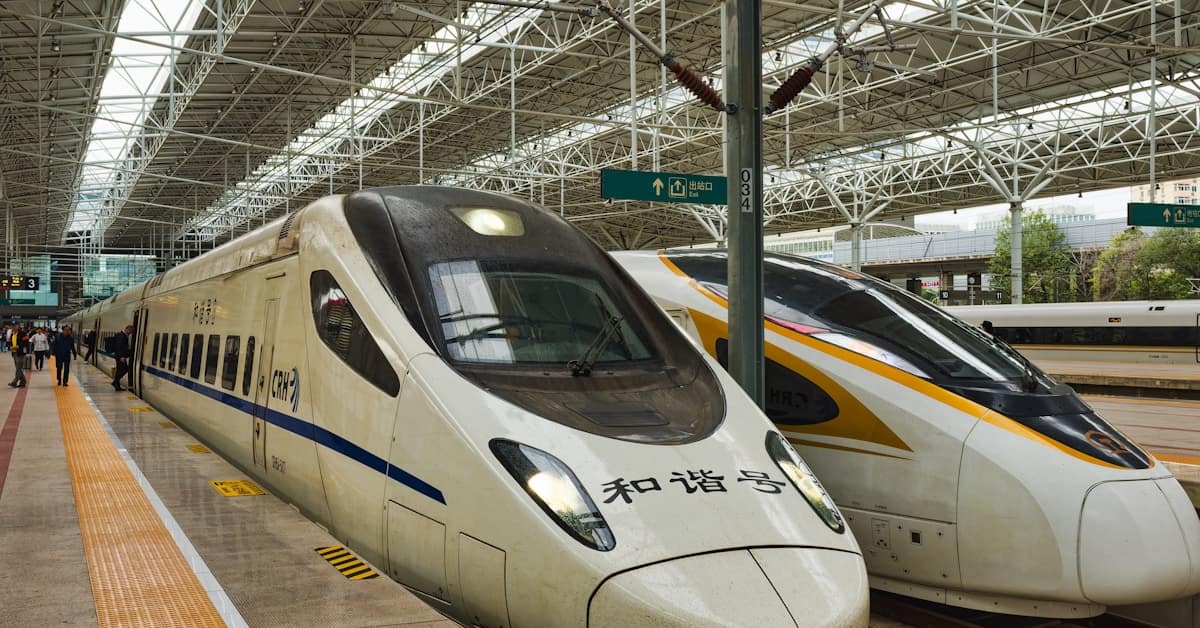
You don’t need a paper ticket. Chinese railway stations use electronic tickets — your passport IS your ticket. At the station, you scan your passport at the ticket gate (there’s a passport scanner at every gate, usually on the right side) and the gate opens. No printing, no QR code, just the passport scan.

Buying Attraction Tickets: Jiuzhaigou Example
Why You Must Book in Advance
Jiuzhaigou caps daily visitors at 41,000 and enforces the limit. Walk-in tickets are not available. If you show up without a booking, you’re driving three hours to Huanglong instead — I watched a couple at my hotel breakfast table discover this the hard way. Tickets sell out fast during peak season (October, national holidays). I booked mine three days ahead for an October Thursday and it was fine, but weekend tickets can vanish within hours of release.
Step 1 — Find the Official Mini-Program
In WeChat search, type “” (Jiuzhaigou — copy these characters if you can’t type them). The official booking mini-program is usually the first result, labeled with “” (official). Tap to open.
Step 2 — Select Date and Ticket Type
The main screen shows available dates in a calendar view. Green dates have availability. Gray dates are sold out. Tap your date. Then select ticket type:
- (wangji quanjiay): Peak season full price — 250 yuan. This is the standard ticket for April through November.
- (danji quanjiay): Off-season full price — 80 yuan. December through March.
The mini-program also sells the park shuttle bus ticket separately — it’s mandatory. The bus ticket was 90 yuan when I went. Buy it together with the entrance ticket.
Step 3 — Enter Visitor Information
For each ticket, enter the visitor’s name (passport name), ID type (passport), and passport number. This is the information that gets checked at the gate. The gate has a passport scanner — hold your passport photo page flat against the scanner, the gate reads it, compares it to the booking, and opens if they match.
I booked for myself only. If you’re booking for a group, each person’s passport details need to be entered separately.
Step 4 — Pay and Confirm
Tap purchase, pay via WeChat Pay. The confirmation appears under “My Orders” in the mini-program. On the day of your visit, go directly to the entrance gate with your passport. No need to exchange for a paper ticket — scan the passport and walk through. I showed up at 6:45am for a 7am opening and was through the gate in under ten minutes.
For more on what the Jiuzhaigou experience itself is like — the route I took, the crowds I hit, and the boardwalk where everyone disappeared — I wrote about it in my Jiuzhaigou trip report.
Other Useful Mini-Programs for Tickets
Tongcheng
A third-party booking platform that sells train tickets, attraction tickets, and hotels. The interface has slightly more English support than 12306 — departure and arrival city names show in pinyin alongside Chinese characters. I used Tongcheng as a backup when the 12306 mini-program was being finicky during National Day week. It charges a small service fee (5-10 yuan per ticket) but the booking process is smoother for non-Chinese speakers.
Meituan
China’s everything app — food delivery, hotel bookings, movie tickets, attraction tickets. The attraction ticket section has decent coverage for major tourist sites. Search by Chinese name or, for popular attractions, by pinyin. I bought a Huangguoshu Waterfall ticket through Meituan when I was in Guizhou — the same trip I tracked in my budget breakdown. The process was identical to Jiuzhaigou: select date, enter passport info, pay with WeChat Pay, scan passport at the gate.
Individual Attraction Mini-Programs
Most major attractions — the Forbidden City, the Great Wall at Mutianyu, Zhangjiajie, Terracotta Warriors — have their own official WeChat mini-programs. Search the Chinese name of the attraction in WeChat and look for the “” (official) label. These are usually the most reliable source for tickets, and they sometimes offer time-slot selection that third-party platforms don’t.
Tips That Would Have Saved Me Time
Book Train Tickets 15 Days Ahead
12306 releases tickets 15 days before departure. For popular routes (Beijing-Shanghai, Chengdu-Jiuzhaigou during holidays), tickets sell out within hours of release. I set a calendar reminder for exactly 15 days before my travel dates and booked the moment tickets opened. During Golden Weeks, I’d book the minute they released — I’m not exaggerating, I watched the ticket count drop from “available” to “sold out” in about 90 seconds for a Beijing-to-Xi’an Friday train.
Screenshot Your Confirmations
Internet at train stations can be spotty. When 30,000 people are trying to load WeChat simultaneously at Shanghai Hongqiao, the data network crawls. I screenshot every ticket confirmation immediately after booking — the order number, the train details, my passenger info. When I couldn’t load the mini-program at the gate once (Beijing South, Monday morning, peak hour), I showed the screenshot to the station attendant, who manually verified my booking and let me through. Took an extra two minutes. Better than missing the train.
Carry Your Physical Passport
Your passport is your ticket. Not a photo of it. Not a photocopy. The actual passport. The gate scanner reads the RFID chip embedded in the passport’s back cover. A photo on your phone won’t trigger the gate. I left my passport at my hotel once and had to go back for it — a 40-minute round trip that nearly made me miss my train from Chengdu to Chongqing. Now the passport stays in my pocket from the moment I leave the hotel until I return.
Use WeChat Pay, Not Alipay, for 12306
Both payment platforms work for train tickets, but 12306’s WeChat integration is slightly smoother in my experience. The payment screen loads faster and the confirmation arrives quicker. When tickets are selling out in minutes, a 10-second speed advantage matters. For attraction tickets, either platform works fine — the difference is negligible.
When Things Go Wrong
Ticket Verification Fails
If your passport verification in 12306 keeps failing, try the Tongcheng mini-program instead. Tongcheng uses a different verification backend that sometimes succeeds where 12306 fails. My partner couldn’t get verified on 12306 for two days — we never figured out why — but Tongcheng approved her in 20 minutes with the same passport information.
Sold Out Trains
If your preferred train is sold out, check nearby departure stations. Beijing has multiple stations (Beijing, Beijing South, Beijing West, Beijing North) and the same destination might have availability from a different one. I couldn’t get a ticket from Beijing South to Xi’an, but Beijing West had seats on a train leaving 30 minutes later. A 30-minute subway ride between stations was the trade-off. Also check different seat classes — second class sells out before first class and business class.
Refunds
Train tickets can be refunded through the mini-program. Refund rules: more than 8 days before departure, full refund. 48 hours to 8 days, 5% fee. 24-48 hours, 10% fee. Less than 24 hours, 20% fee. Refunds go back to your WeChat Pay balance, then to your linked credit card. Processing takes 3-7 business days. I refunded one ticket (changed my travel date) and the money was back on my card in 5 days.
I bought my last train ticket of the trip — Kunming to Shanghai, second class, 879 yuan — while sitting in a Kunming noodle shop, using the 12306 mini-program with one hand and eating crossing-the-bridge noodles with the other. The whole process took about two minutes. No queue, no language barrier, no confusion. The ticket was waiting in my WeChat orders when I arrived at the station the next morning. I held my passport to the scanner, the gate opened, and I walked onto the platform. From clueless foreigner at Chengdu East to booking tickets with chopsticks in one hand — that’s the learning curve. It’s shorter than it sounds.
