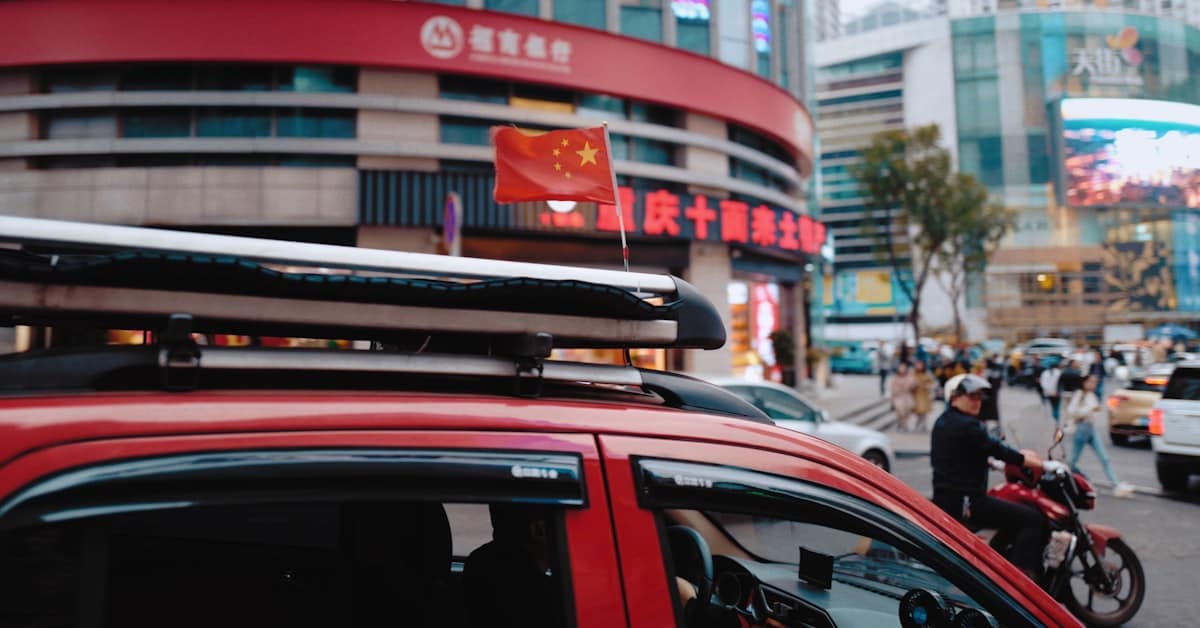

The thermometer outside the convenience store read 41. I checked twice because I thought my phone screen was lying. It was 11:42am on a Thursday in late July, and I was standing on a sidewalk in Chongqing wearing a black t-shirt that had stopped being a t-shirt twenty minutes earlier and was now a wet rag with sleeves.
I had three hours until my next train. I had planned to walk along the Yangtze to Ciqikou old town. I had planned a lot of things that morning.
I went into the convenience store instead and bought a cold Sprite. The cashier looked at me with the gentle pity Chinese people reserve for foreigners who do not understand what summer means in the river-valley cities. She said something I didn’t catch and pointed at the back wall, where there was a small plastic stool next to the cold drinks fridge. I sat on the stool for forty minutes. Other people came in, bought water, looked at me, and left.
The Day Chongqing Hit 41 Degrees and I Gave Up by Noon
I had landed in Chongqing two days before, smug and underprepared. I’d packed for July like I was going somewhere with a beach. Linen shorts. A wide-brimmed hat. One bottle of sunscreen that turned out to be SPF 15 because I read the label wrong in the airport. I had not packed an umbrella. In the river cities of central China, the umbrella is not for rain. It is for the sun and for the steam that comes off the pavement at 10am.
My first night I’d walked the Hongyadong waterfront and decided July in Chongqing was fine. It was 32 degrees and the air moved. There were teenagers in matching outfits taking videos, and a man selling cold beer out of a cooler for 5 yuan a can. I drank two of them looking at the bridge lights and thought everyone had exaggerated.
The next day the heat dome arrived.
I learned later from the hostel owner that Chongqing, Wuhan, and Nanjing are called the Three Furnaces. She said it like she was naming three difficult cousins. The temperature spent the next four days between 39 and 42, and the humidity kept it from cooling down at night. At 11pm it was still 33 degrees. I would step out of an air-conditioned restaurant and my glasses would fog so completely I had to stop walking and wait for them to clear.
The Mall as Refuge, Not Destination
By the afternoon of day two I had developed a new strategy. Walk fifteen minutes, enter a mall, stand under the vent above the entrance for ninety seconds, walk another fifteen minutes. The malls in Chongqing are enormous and they all have the same brands and the same iced bubble tea shop on the second floor. I cannot tell you which mall I went to on Thursday. I can tell you the iced tea was 18 yuan and the woman behind the counter laughed when I asked her to make it extra cold.
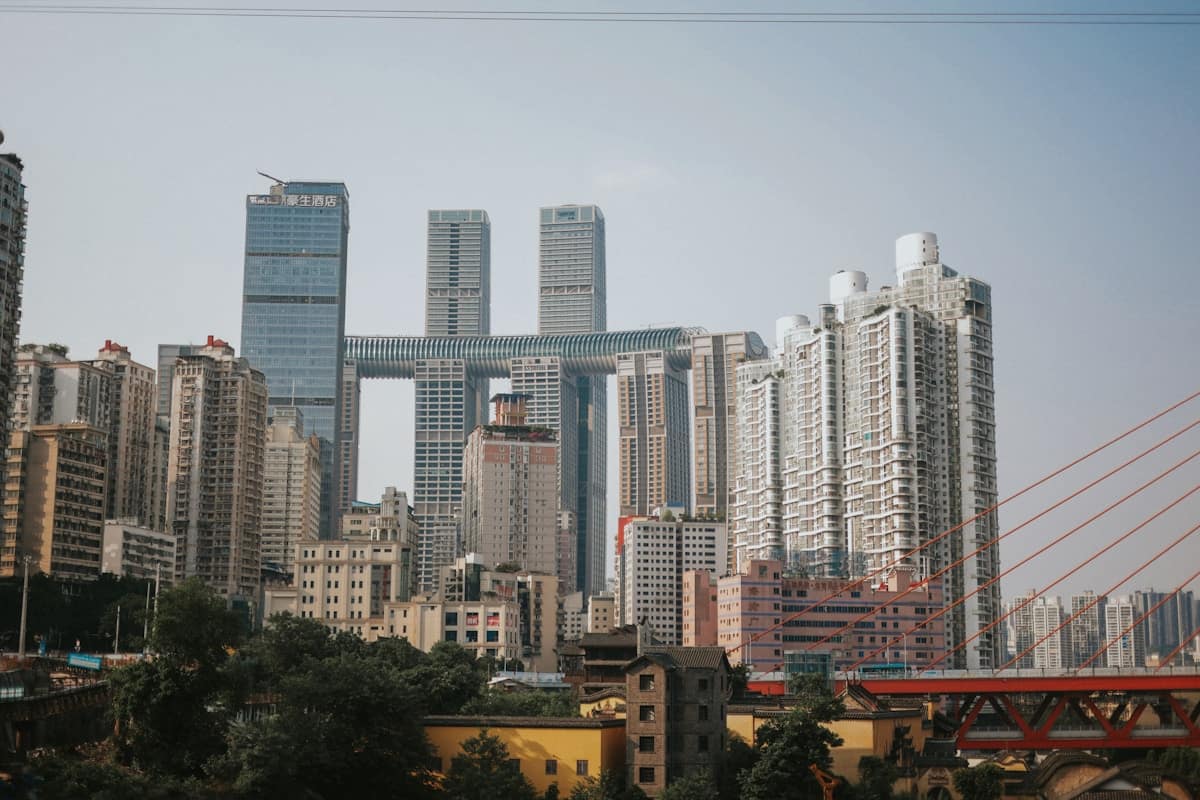
I had wanted to see the Chongqing of the postcards — the cyberpunk crossings, the Liziba light rail going through the apartment building, the Yangtze cableway at sunset. I did see those things. I saw them from inside taxis with the AC on full, in five-minute bursts between air-conditioned interiors.
Getting Out: The 6:43am Train to Kunming
By Friday morning I had a new plan. I had originally meant to spend a week in Chongqing and then take the slow boat down the Yangtze. The slow boat sounded good in February when I booked the trip. In late July, sitting in a hostel common room with the AC blasting and three other foreigners all visibly damp, the idea of being on a boat in the sun for three days made me want to lie down.
One of the other travelers, a German woman who’d been in China for a month, looked at her phone and said, “Kunming is 24 degrees right now.”
I changed my ticket that afternoon.
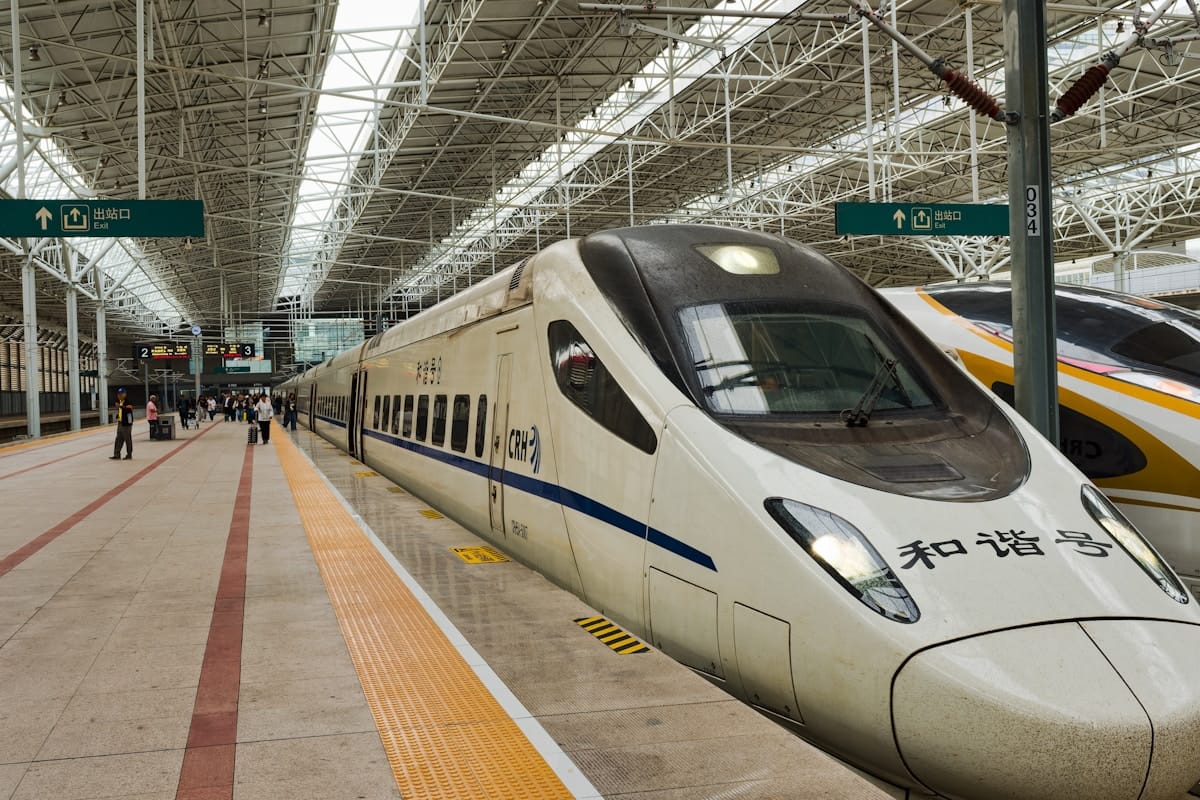
The high-speed train to Kunming leaves Chongqing North Station at 6:43am, which sounded early until I worked out that getting to the station at 6am meant walking through a city that hadn’t yet absorbed the day’s heat. I left the hostel at 5:30. The street was almost dark and almost cool. There was a man hosing down the sidewalk outside a noodle shop, and the steam coming off the concrete smelled like wet stone and yesterday’s cooking oil. After this trip I started recommending the same exact hour to anyone I knew who was planning a July visit — the only sane time to be outside in a furnace city is before the sun gets above the buildings.
The Logistics, While I Have Your Attention
I’d made the booking through WeChat the night before — it took maybe ninety seconds and was easier than I’d expected. The ticket was 263 yuan for a second-class seat, six and a half hours. I’d been warned that summer is peak season for the southwest routes, and that warning was correct. The 9am train and the 11am train were both sold out for the next three days. The 6:43am still had seats.
The train was full but quiet. Everyone who got on at 6am had the same look on their face — a person who had decided to leave a hot city while it was still possible to do anything other than sweat. Across the aisle from me a man unwrapped a thermos of tea, took a sip, and immediately fell asleep with the cup still in his hand.
The connectivity question came up halfway through the trip when I tried to send a photo to my partner and remembered I’d forgotten to deal with the Great Firewall. I’d been getting away with hostel WiFi for two days. My Chinese SIM worked for WeChat and Alipay but Google and Instagram were dead. I’d written more about this in a longer note on getting an eSIM that actually works in China — the short version is that I should have set it up before I landed and didn’t, and on the train going through three tunnels per minute I had a lot of time to regret it.
Stepping Off the Train in Kunming and Putting on a Sweater
I want to overstate this because it deserves to be overstated. I walked out of Kunming South Station and felt cold. Not pleasantly cool. Cold. I was wearing the same damp t-shirt I’d left Chongqing in and I had goosebumps by the taxi rank. The driver who took me to the hostel had the windows down. I asked if he could turn on the heater. He laughed for a full minute.
Kunming sits at 1,900 meters. In late July the high was 23 degrees and the low was 14. There was a breeze that smelled like eucalyptus from somewhere I couldn’t identify. I’d been in China for nine days and this was the first time I’d been outside without immediately calculating how far away the nearest air conditioning was.
I dropped my bag at the hostel and walked. I walked for four hours. I went to Green Lake Park and sat on a bench for an hour watching old men play Chinese chess. Two of them were arguing about a move and a third was laughing. None of them seemed to notice the weather, which was the entire point — when the weather is good in summer China, the locals stop noticing it. That tells you everything.
What I Should Have Done From Day One
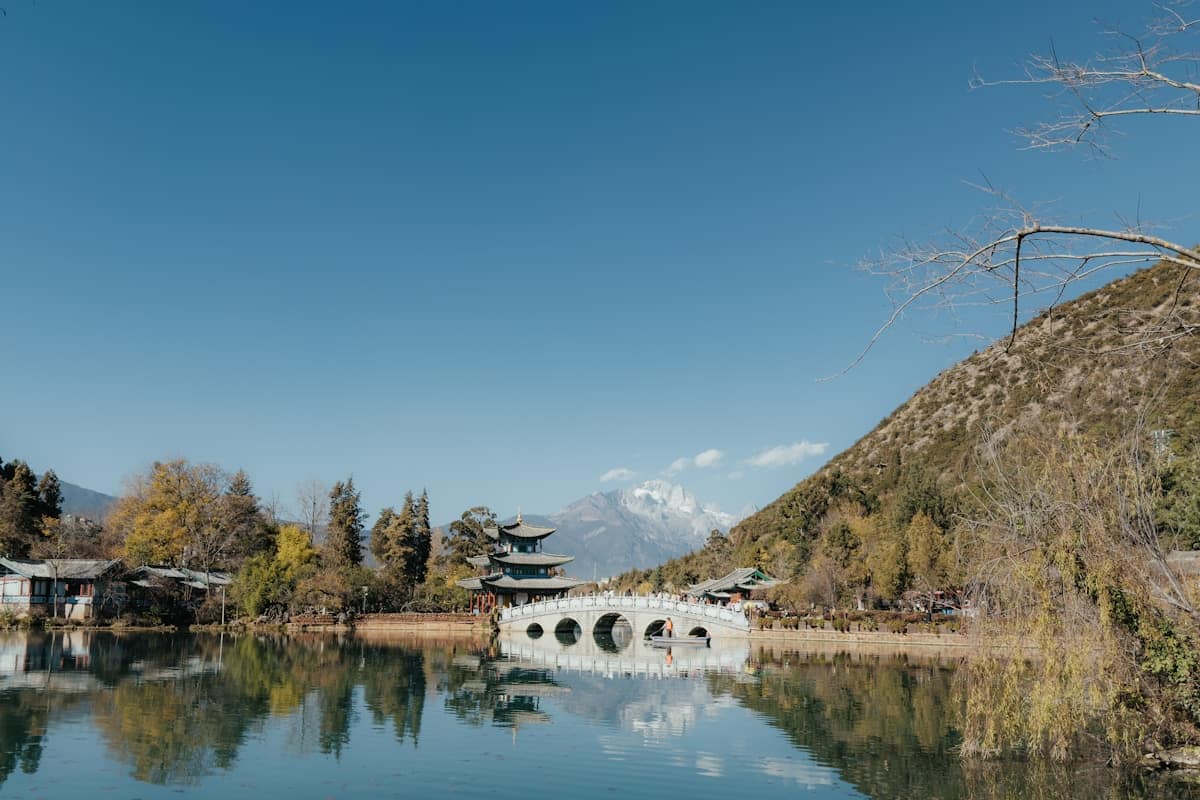
If I’d been smarter, I would have flown straight to Kunming and used it as a base for everything in late July and August. The Yunnan-Guizhou plateau is the obvious answer to the question of where to go in China during the hottest weeks, and it took me five days of being miserable to figure that out. Dali is two hours north by train. Lijiang is another two hours past that. Both sit between 1,800 and 2,400 meters, and both stay in the low twenties through August.
The same logic works for the western edges — Chengdu is hot in summer but the mountains an hour outside it are not, and the high country up toward Jiuzhaigou stays cool enough that you can hike at noon without thinking about it. I’d done that trip the previous October and I should have remembered the math: altitude is the only honest answer to a Chinese summer.
The catch is that everyone else figures this out too. Lijiang in mid-July is full of domestic tourists who have escaped Shanghai and Chengdu and want a few cool days. My hostel in Kunming had a wait list. The Dali train was sold out for the weekend. The trick was to move on weekdays and book three days ahead, not three weeks. I’d done some of the homework on summer routes before this trip and ignored most of it, which was a separate kind of mistake.
Nine PM Is When China in July Actually Starts
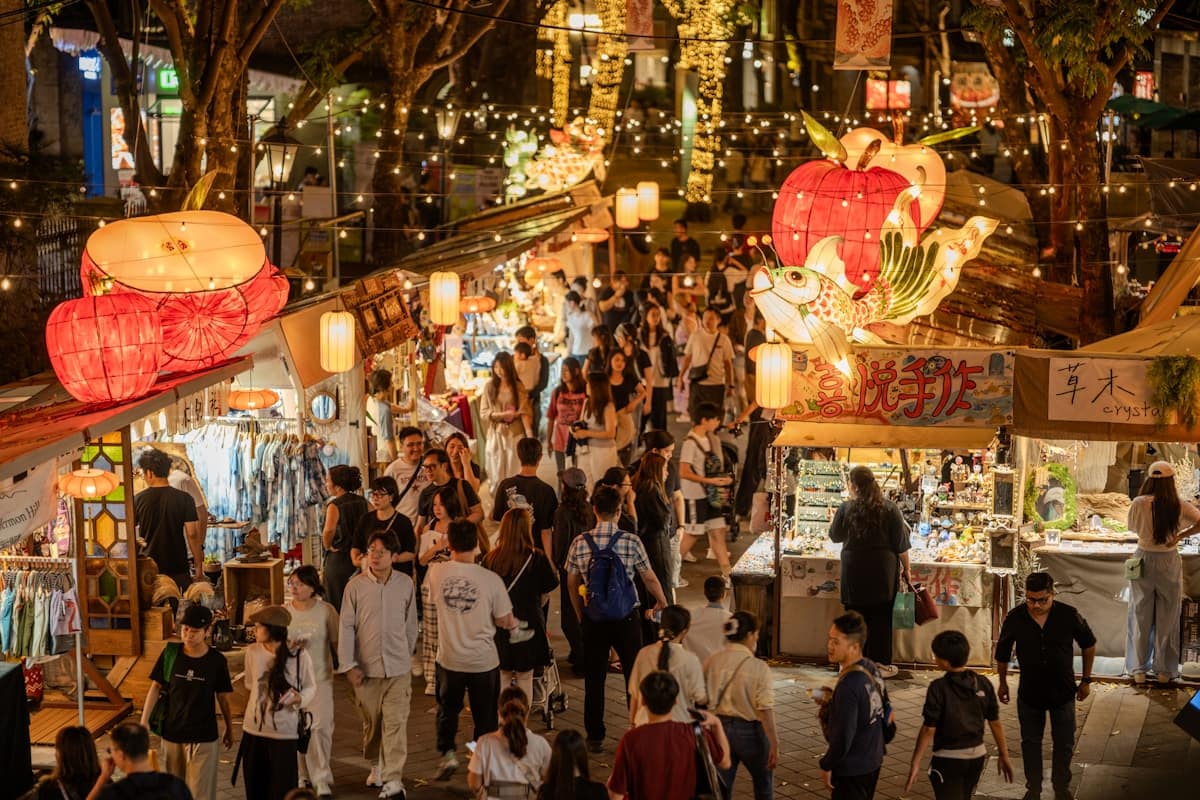
There was a night market three blocks from my Kunming hostel. It opened around eight and ran until one or two in the morning. The stalls sold grilled potatoes and cold noodles and something on a stick that the vendor described by making a squawking gesture, which I took to mean chicken and decided not to ask further.
But the real night market energy was in Chongqing, on that first night before the heat dome. I’d walked through a street of food stalls near Jiefangbei where the cooking smoke mixed with humidity until the air tasted like chili and grease and I was sweating so much it didn’t matter. That was the thing about summer in the furnace cities. The day tried to kill you and the night made up for it. People came alive at nine. Families brought folding tables onto the sidewalk and ordered hotpot. Children ran between the stalls in their underwear. An old woman sold sour plum juice from a metal bucket, 3 yuan a cup, and I drank five of them sitting on a low wall watching the steam rise from a dozen wok fires.
The Unwritten Summer Schedule
By the end of the trip I’d adopted the local rhythm without meaning to. Wake at 5:30. Walk from 6am to 8:30am while the city was still breathing. Eat breakfast. Go inside until 5pm. Come back out for the night market hours. Sleep around midnight. Repeat. This is what Chinese people in the south actually do in summer. The parks at 6am are full. The parks at 2pm are empty. The restaurants at noon are half full. The restaurants at 9pm are packed.
I fought this schedule for the first four days because I wanted to fill my days with sightseeing. By day five I’d stopped fighting and started eating breakfast noodles at 7am with the retired men and drinking cold plum juice at 10pm with the families. I saw more of real life in those hours than I ever saw at noon.
The Typhoon I Missed in Xiamen and Other Coastal Stories
I had a friend who’d been in Xiamen the same week. We were texting on WeChat. She said the typhoon warning had gone up two days before it hit, and her hotel had taped X marks across the windows in masking tape. The ferries to Gulangyu were cancelled for three days. Her flight back to Shanghai got rebooked twice. She spent forty hours in a hotel room watching the rain come sideways across the bay.
July and August are typhoon months on the southeast coast. Fujian, eastern Guangdong, Hong Kong, sometimes pushing into Shanghai. I had originally planned to add Xiamen to this trip. I’d taken it off the list in March after looking at typhoon frequency charts. I felt very smug about that decision until my friend sent me a photo of the rain hitting her window horizontally and I felt smug for a completely different reason.
The Chinese typhoon season is more predictable than people think. It peaks in late July through early September, and the warnings are usually accurate three to five days out. After my friend’s three lost days I started watching the China Meteorological Administration warnings every morning and building a buffer day into anything coastal. I had not done that before. I do it now.
What Worked, Quietly, the Whole Trip
By the second week I had a small kit that had become essential. A folding fan from a vending machine. A microfiber sweat towel that hung from my backpack strap. SPF 50 sunscreen, finally, after the airport mistake. A 1.5L water bottle that I refilled at every hostel and convenience store. An umbrella for sun, not rain, which I’d bought at a Walmart in Chongqing for 35 yuan after a Chinese woman at a bus stop watched me sweating and silently handed me hers for the length of the ride.
The thing nobody warned me about was the indoor-outdoor temperature shock. Restaurants and trains in summer China are kept at around 18 degrees. The street is 38. I’d walk in and my glasses would fog. After two weeks of this my throat hurt constantly. I started carrying a thin long-sleeve shirt to put on inside, which was the most middle-aged thing I’d ever done on a trip and also the only thing that fixed it. The Chinese aunties had been doing this for decades. I should have copied them on day one.
The Guizhou Detour I Almost Took Instead
On the train from Chongqing I’d been deciding between Kunming and Guiyang. Guiyang is the capital of Guizhou, also up on the plateau, also cool in summer. I picked Kunming because the train was forty minutes shorter and the hostel was cheaper. I made the decision by coin flip in the Chongqing waiting room. I have thought about that coin flip several times since.
I’d been to Guizhou the previous spring — three days through Anshun and the Huangguoshu Waterfall area, mostly on buses that smelled like old diesel and rice liquor. I’d written about that trip when I got home, because the bus from Anshun to Huangguoshu had no business making it up the grade it climbed. In summer the same route would have been ten degrees cooler than Chongqing and probably less crowded than Kunming. If I do this trip again I’ll fly to Guiyang, do four days through the karst country, then move on to Yunnan.
I had a longer conversation about all this with the German woman from the Chongqing hostel. She handed me a hand-drawn map on a napkin showing Guizhou, Yunnan, and the western edges of Sichuan as “the cool triangle.” She’d been doing the same loop for three weeks. I took a photo of the napkin. It’s still on my phone.
I flew out of Kunming on a Tuesday morning. The taxi to the airport left at 5:30am and the sky was the kind of grey-blue that promises a cool day. I had on the long-sleeve shirt I’d been keeping in my backpack for restaurants and the cabin of trains. The driver had the windows down. The air smelled like cut grass from somewhere along the airport road.
I had a bag of dried mango I’d bought at the night market the previous evening. I ate half of it watching the city move past — the morning crowds, the produce trucks, a woman setting out folding chairs in front of a noodle shop. I thought about the convenience store stool in Chongqing. I thought about the German woman’s napkin map. The other half of the mango I saved for the plane.