
The bus dropped us at a parking lot that smelled like exhaust and steamed corn. A woman at a folding table was selling gloves for ten yuan. I bought a pair even though it was April — my hands were already cold, and the mountain above us was still in shadow. I had almost gone to Badaling. That was the first thing I thought about when I saw the stone steps going straight up into the trees.
The man from Cologne had talked about Badaling for the entire ninety-minute ride from central Beijing. “It is the famous one,” he said. “The one in all the photos.” I nodded and told him I was going to Mutianyu instead. He looked at me like I was deliberately missing the point. Maybe I was. The Mutianyu section is farther. There is no high-speed train directly to the entrance. But a friend who has lived in Beijing for six years sent me a video from the previous weekend — a solid human wall of tourists packed shoulder-to-shoulder on a restored rampart, people taking selfies with a guy dressed as a Ming dynasty soldier. “Go to Mutianyu,” she wrote. “Leave earlier.”
I left the hostel at 5:40am. The tourist bus was half full, mostly European retirees and a family from Shanghai with a child who threw up into a plastic bag somewhere around the fifth ring road. The smell of steamed corn hit us when the driver opened the door. It was coming from a stall near the restrooms. I bought two ears for breakfast. They were tougher than they looked, and the kernels stuck in my teeth for the first hour of the hike.
6:15am and the Parking Lot Smelled Like Corn
I had already figured out the ticket situation the night before, which was good, because the cell signal at the mountain base was weak enough to make any app feel broken. I had gone through the same WeChat mini-program ritual for the train tickets to Zhangjiajie two weeks earlier, so the interface felt familiar. The Mutianyu entrance fee was 40 yuan. I skipped the cable car ticket because I wanted to walk up. This decision would matter later, though not in the way I expected.
The parking lot was full of buses already, which surprised me. I had assumed 6:15am would be early enough to have the place to myself. A tour group from Tianjin was forming a line near the entrance, their guide holding a small flag with a cartoon panda on it. I walked past them and through the stone archway that marks the start of the visitor area. A man in a padded jacket checked my ticket without looking up from his phone. He was watching a video with the sound on. The audio followed me for the first fifty steps.
The Steps Started Before I Was Ready
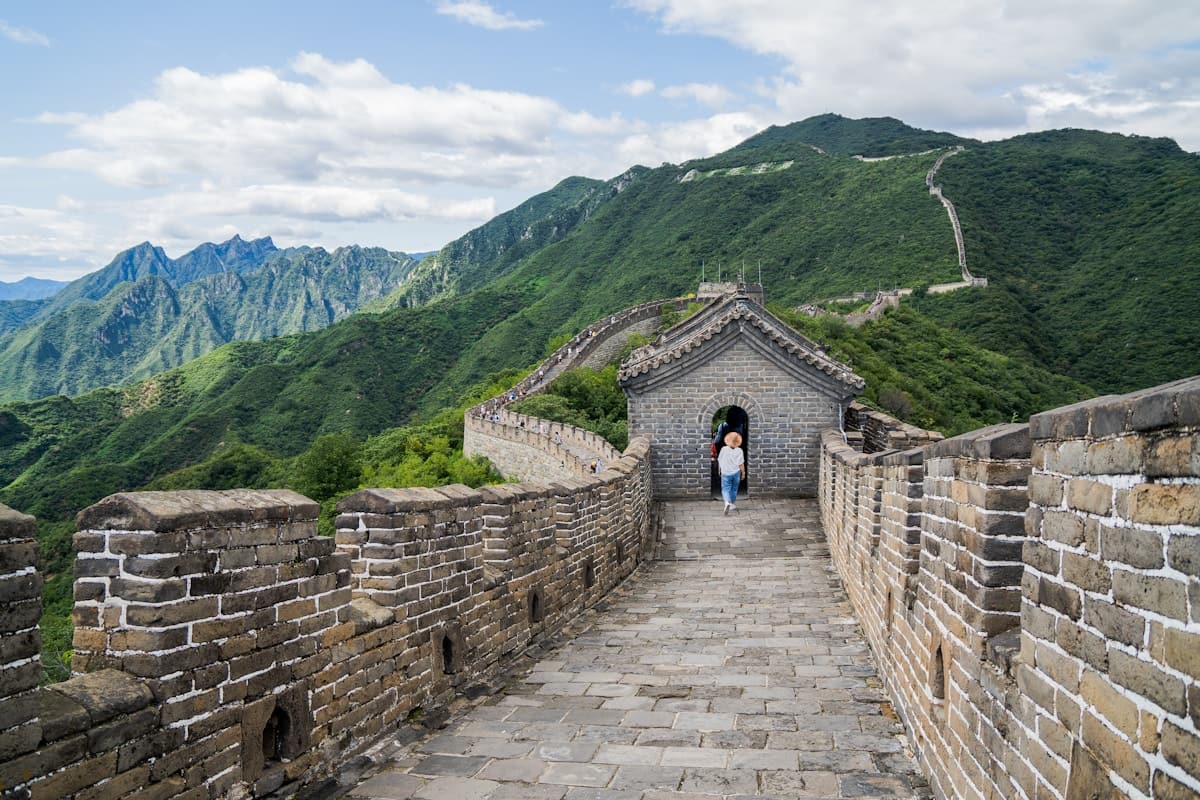
The first flight of stone stairs begins immediately after the ticket gate. There is no warm-up, no gentle slope, no informational plaque to read while your legs adjust. Just uneven blocks worn smooth by centuries of feet, going up at an angle that made me conscious of every kilogram in my backpack. I had a liter of water, a jacket I did not need yet, and a camera I would eventually stop using.
I counted the steps for the first hundred, then lost track at a switchback where a sign pointed left to Tower 6 and right to Tower 1. I went left. The steps got steeper. My lungs were louder than the wind. A Chinese family in matching red windbreakers passed me without breathing hard, the grandfather carrying a toddler on his shoulders. I stepped aside and leaned against the wall. The stone was cold through my shirt.
The Sound Changed at Tower 8
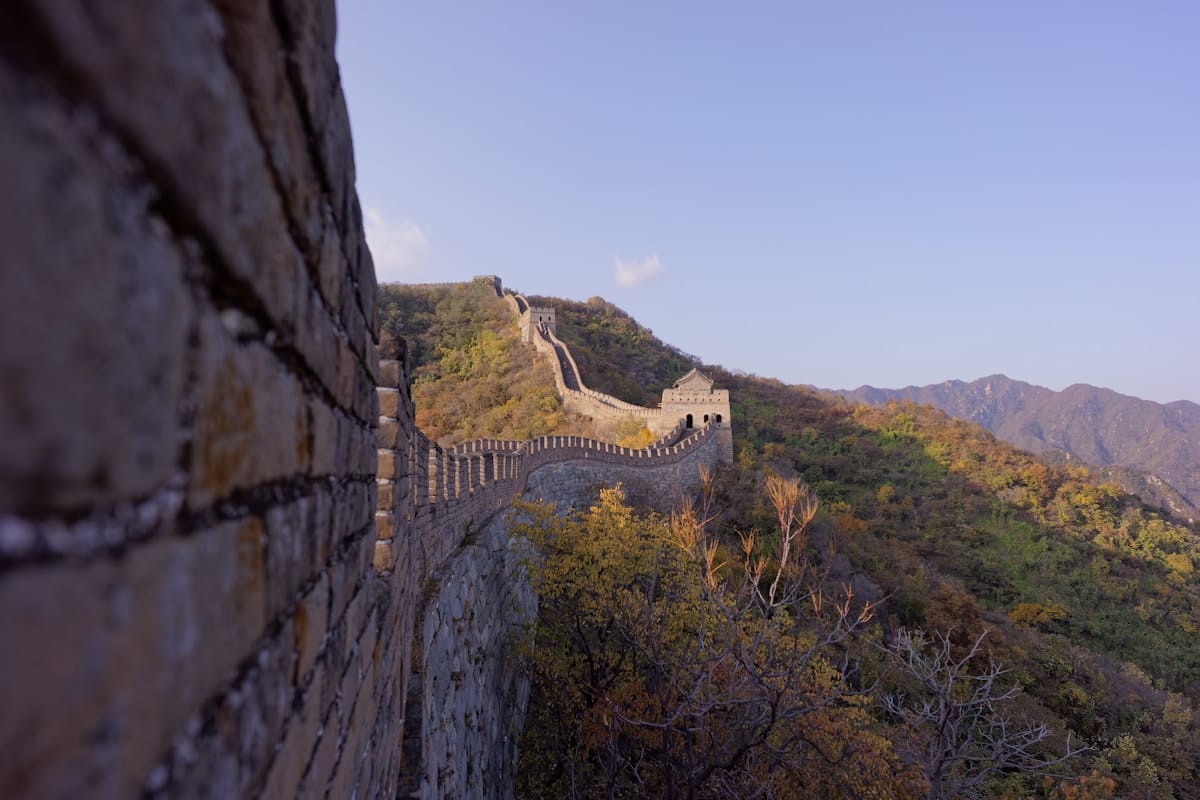
The sound changed as I climbed higher. Down near the entrance, there had been Chinese pop music playing from a souvenir shop and the metallic clank of the cable car mechanism overhead. Up here, past Tower 8, the only sound was my own footsteps and a bird I could not identify. The wind carried something else too — a faint chemical smell from a factory valley far to the north, probably Hebei province. I had read that you can see the pollution layer from the Wall on bad days. This was not a bad day. The sky was pale blue and the mountains rolled out in ridges that kept going until they faded into a soft gray haze.
My map app had stopped working the morning I arrived in Beijing. Google Maps is not functional without a VPN, and I had not sorted mine out yet. That failure is what pushed me to figure out eSIMs and VPNs before the rest of the trip, but on the Wall I was glad to be disconnected. I was on a wall. The only directions were forward or back.
Tower 14 and the Moment I Stopped Taking Photos
I had been taking photos every five minutes for the first hour. The usual shots — the wall snaking over a ridge, my shoes on the ancient bricks, a selfie with the mountains behind me. By Tower 12 my phone battery was at 60 percent and my interest in documentation was dropping faster. The Wall was becoming something I was inside of, not something I was looking at.
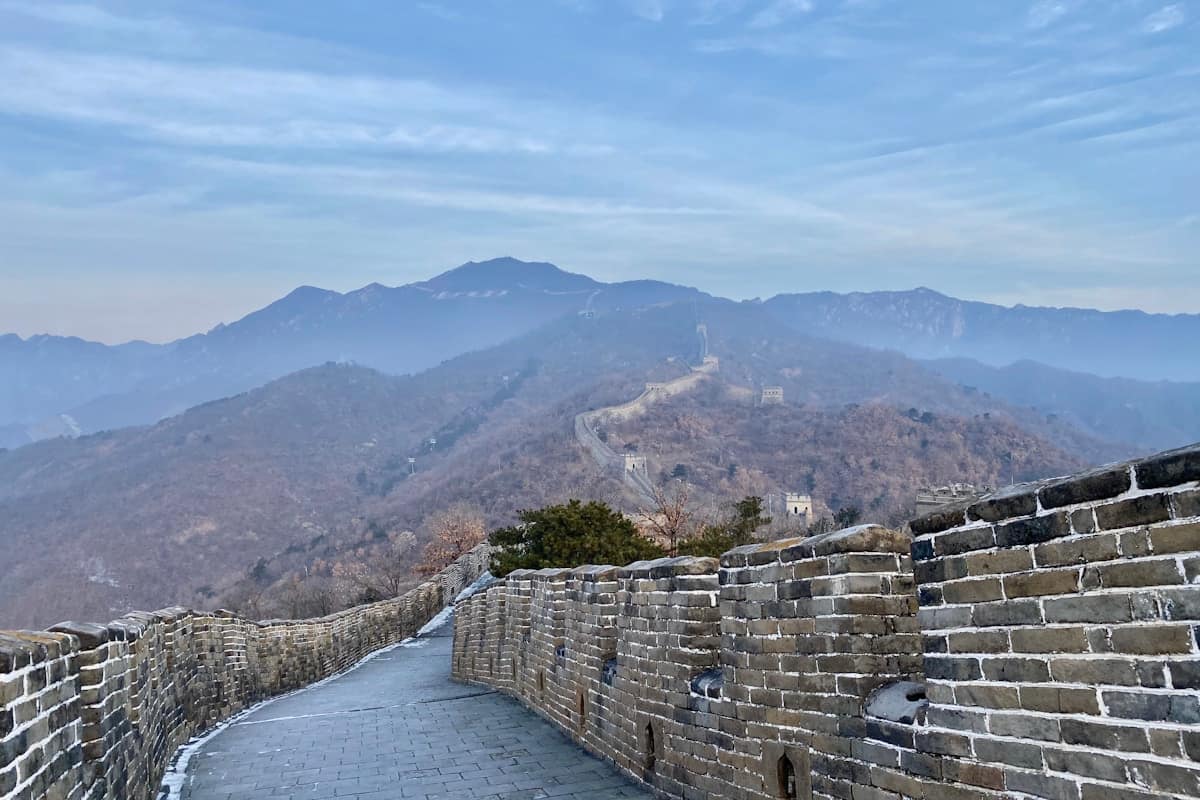
Tower 14 is where I stopped. Not because I was tired, though I was. I stopped because I stepped through the arched doorway into the tower’s interior and the temperature dropped ten degrees. The stone walls were covered in carvings — names, dates, hearts, some in Chinese, some in English, some in alphabets I did not recognize. The oldest one I could make out was 1987. The tower had no roof. Just four walls and a square of sky, and a pigeon nesting in the corner who did not care that I was there.
Eleven Minutes on the Threshold
I sat down on the threshold with my legs dangling over the edge where the wall dropped away. I did not take a photo. I sat there for eleven minutes. I know because I checked my phone afterward, expecting to find some profound thought in my notes app. I had written: “The bricks are warm where the sun hits them and cold where they don’t.” That was all. I did not add anything else.
A German couple arrived from the north, breathing hard. The woman nodded at me. The man said something in German that sounded like a complaint about the steps. They took two photos and kept walking. I stayed. The wall stretched in both directions, up and down, rising and falling with the mountain ridges like it was following a breathing pattern. I thought about the people who built it, then stopped myself. That line of thinking felt like a travel brochure. What I actually thought about was whether I had enough water to keep going to Tower 20. I did not. I had drunk most of it on the climb up, underestimating how much you sweat in dry mountain air.
The Cable Car I Should Have Ignored
I turned back at Tower 16. My knees were making a sound I did not like on the downhill sections, a faint clicking that I chose to ignore. The original plan was to walk down the same way I came up, but at Tower 10 I saw a sign for the cable car and my legs made the decision before my brain caught up. The ticket was 100 yuan one-way. I paid in cash because the card reader was broken. The woman in the booth looked annoyed that I did not have exact change. She gave me my ticket and immediately turned back to her phone.
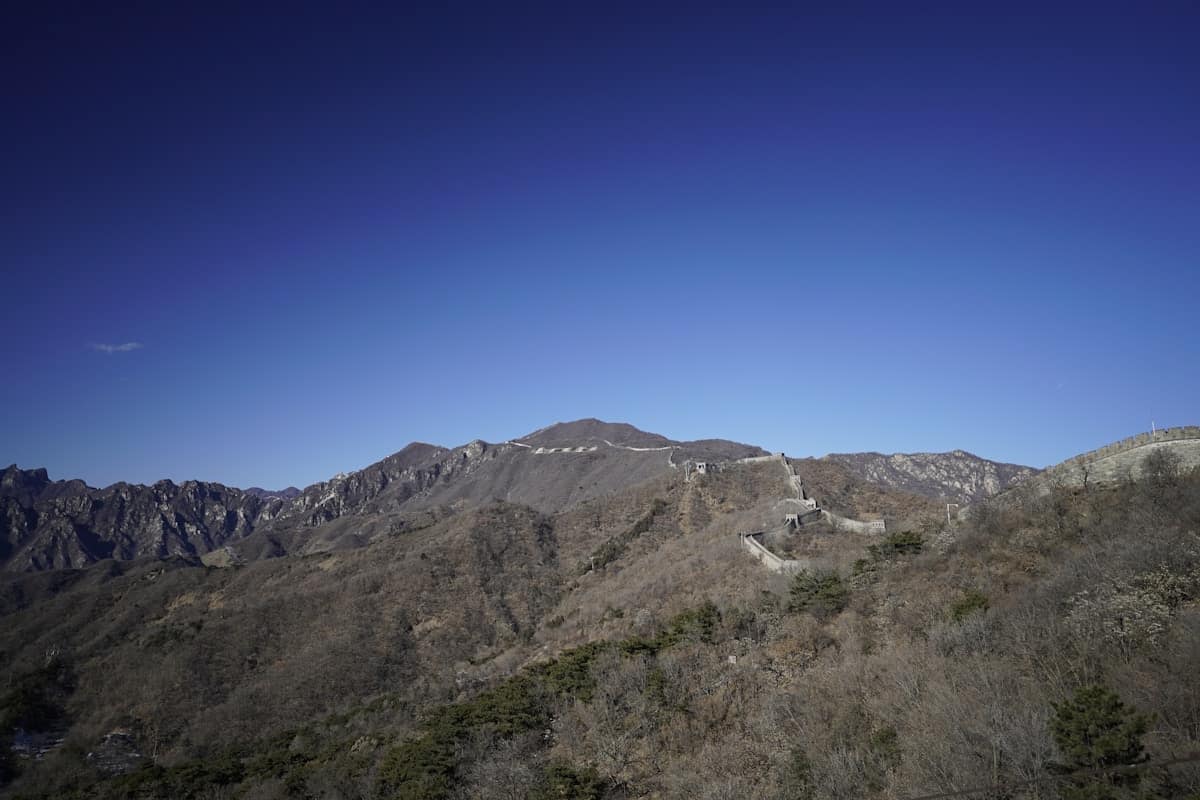
The cable car line took thirty-five minutes. Thirty-five minutes of standing on a concrete platform with a hundred other people, watching the same German couple from Tower 14 push past everyone to the front because they had a “fast pass.” The car itself was a metal box that seated six. I got squeezed in with a family from Guangzhou who talked loudly about lunch plans the entire three-minute ride down. The view was good. I did not care. I should have walked. My knees would have recovered. The line stole something I could not name — the quiet I had earned on the climb up, maybe. Or the illusion that I had escaped the infrastructure of tourism.
The Camel Looked Bored
The bottom was worse. A long corridor of souvenir stalls selling “I Climbed the Great Wall” t-shirts and replica swords. A man tried to sell me a keychain with my name carved into it. Another man offered a photo with a camel. The camel looked bored. I walked through it as fast as I could, past the steamed corn stall which was now doing brisk business, back to the parking lot where the bus would not leave for another hour.
I walked alone for twenty minutes without seeing anyone. I had tested the same feeling in three cities after midnight for a previous assignment, but the Wall at 9am was a different kind of quiet. Not threatening. Just empty. A guard at Tower 8 had told me the last serious incident was two years ago, and that was someone ignoring the closed sign on the unrestored section. I believed him.
Dust in My Shoes at the Bottom
The bus left at 1:30pm. I sat in the same seat, next to a different person — a woman from Melbourne who had gone to Badaling after all. “It was fine,” she said. “Crowded, but fine.” She showed me her photos. They were good photos. The Wall looked the same in both places, which was somehow both reassuring and strange.
I emptied my shoes in the parking lot before getting on. A fine gray dust came out, mixed with small stone fragments that had worked their way through the mesh. I kept one fragment. It is on my desk now, next to my keys. I do not know what I will do with it.
Lunch Near Dongzhimen
On the ride back to Beijing I fell asleep with my forehead against the window. When I woke up we were already in the city, stopped at a light near the third ring road. A delivery driver on an electric scooter was watching a video on his phone while waiting for the green. The sound of the city came back gradually — horns, construction, someone shouting into a speaker about discounted fruit. The Wall felt like it had happened in a different month, not a different morning.
I ate lunch at a noodle place near Dongzhimen. The noodles were average. I finished them anyway. My legs hurt for two days every time I stood up from a chair. On the third day the pain was gone, and I missed it a little.