
The Bus to Huangguoshu
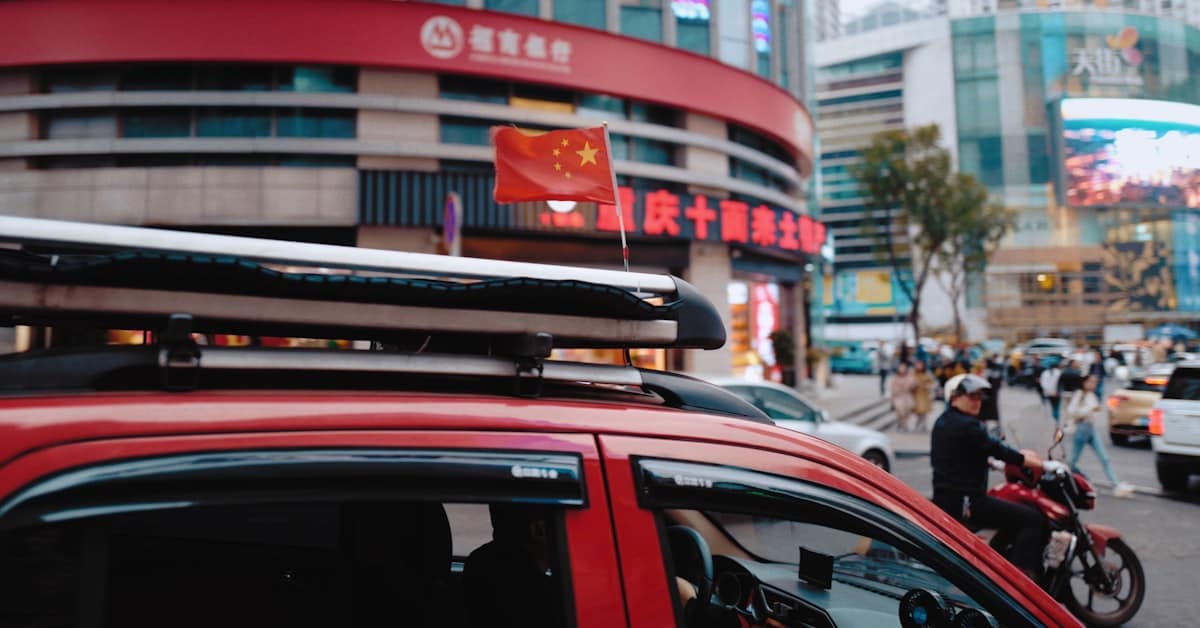
The bus left Guiyang at 7:10am, which in Guizhou terms meant 7:25. I’d booked a ticket online the night before — 55 yuan for a two-hour ride to Huangguoshu Waterfall — and the station was the kind of concrete box where nobody speaks English and the departures board is more suggestion than schedule. A woman at the ticket window looked at my phone screen, pointed at the platform number, and said something I didn’t catch. I followed her finger.
The bus was half full. The man next to me was carrying a live chicken in a woven basket. The chicken did not seem happy about the arrangement. We pulled out of Guiyang into mountains that kept folding over themselves — tunnel, bridge, tunnel, bridge — and somewhere around the one-hour mark the road started climbing and the driver began taking switchbacks at a pace that made the chicken press flat against the basket’s bottom. I gripped the armrest. The woman across the aisle was asleep.
Huangguoshu: The Sound Before You See It
Getting to the Falls
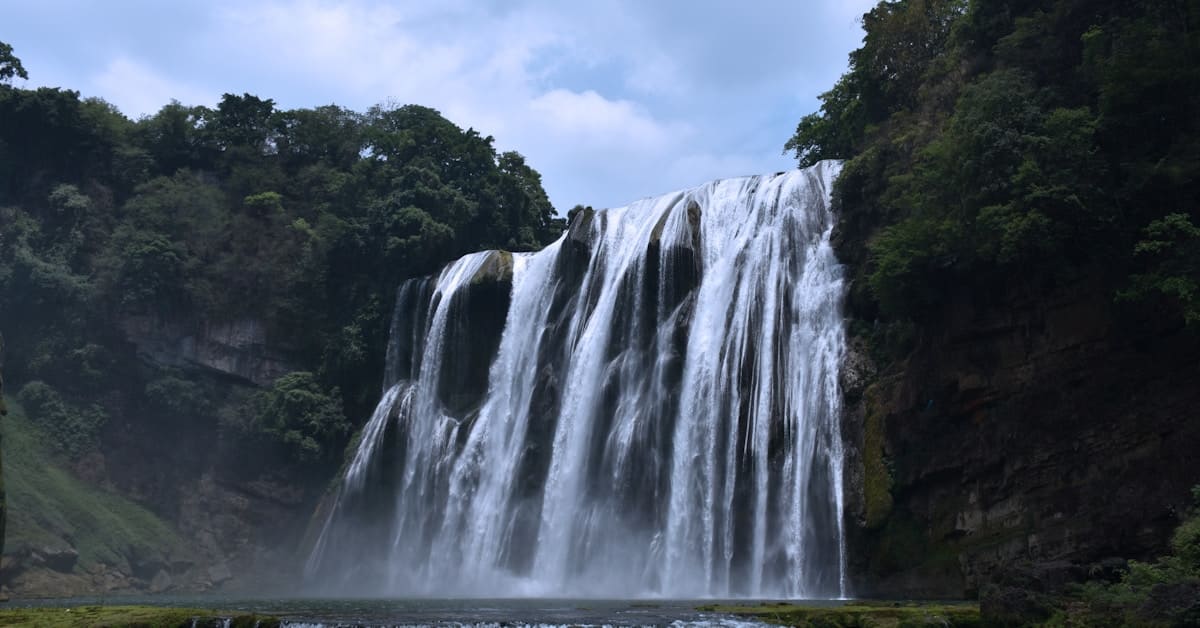
The entrance ticket was 160 yuan, which felt steep until I saw the size of the park. You can’t just walk to the waterfall — there’s a system of boardwalks and paths through a gorge, and the walk from the gate takes about 25 minutes. The sound arrives first. It’s a low rumble that you feel in your chest before your ears register it as water. Then the trees thin out and there it is: 77 meters wide, 83 meters tall, a wall of white water dropping into a pool that generates its own weather system. The spray reached me 100 meters away.
The Water Curtain Cave — a path that goes behind the waterfall — was the part I’d read about. You walk through a carved tunnel in the cliff face with the waterfall pouring directly in front of the openings. It’s loud enough that you can’t hear yourself think. Water drips from the ceiling. The handrails are wet. My shoes were soaked through within five minutes and I didn’t care.
The Tour Group Problem
By 10:30am the tour groups had arrived. Identical red caps, flag-waving guides, and a strange synchronized photo ritual where everyone stood in the exact same spot, made the exact same peace sign, and moved on. The trick: go early or go late. I went early, had the main viewpoint to myself for maybe 15 minutes, and then retreated to the secondary paths where the crowds thinned out. The Doupotang Falls, a 20-minute walk downstream, had maybe a dozen people when I got there at noon. Smaller but quieter, and you can get close enough to feel the temperature drop.
That Night in a Miao Guesthouse
I’d booked a room in a village called Tianlong, about 40 minutes from the waterfall area. The guesthouse was a wooden house on stilts overlooking a valley of rice paddies — 120 yuan for the night, breakfast included. The owner, a Miao woman in her sixties, didn’t speak Mandarin clearly (her dialect was local) but communicated through gestures and an enormous smile. She poured me a cup of rice wine before I’d even put my bag down.
The wine was sweet and deceptive. It goes down like juice and hits like a truck 20 minutes later. She kept refilling my cup every time it dipped below halfway, which is apparently the Miao hosting tradition. I stopped counting after the fourth refill.
Dinner was sour soup fish — the signature Guizhou dish. The broth is fermented with tomatoes and rice, giving it a tang that’s somewhere between kimchi and lemonade. The fish was whole, floating in a pot over a gas burner on the table, and I ate it with rice and pickled cabbage. I paid 60 yuan for a meal that would’ve cost triple in Shanghai. For context on how far money goes in this part of China, the budget destination guide covers similar math for other provinces.
Xijiang at Dawn, Xijiang at Night
The Largest Miao Village
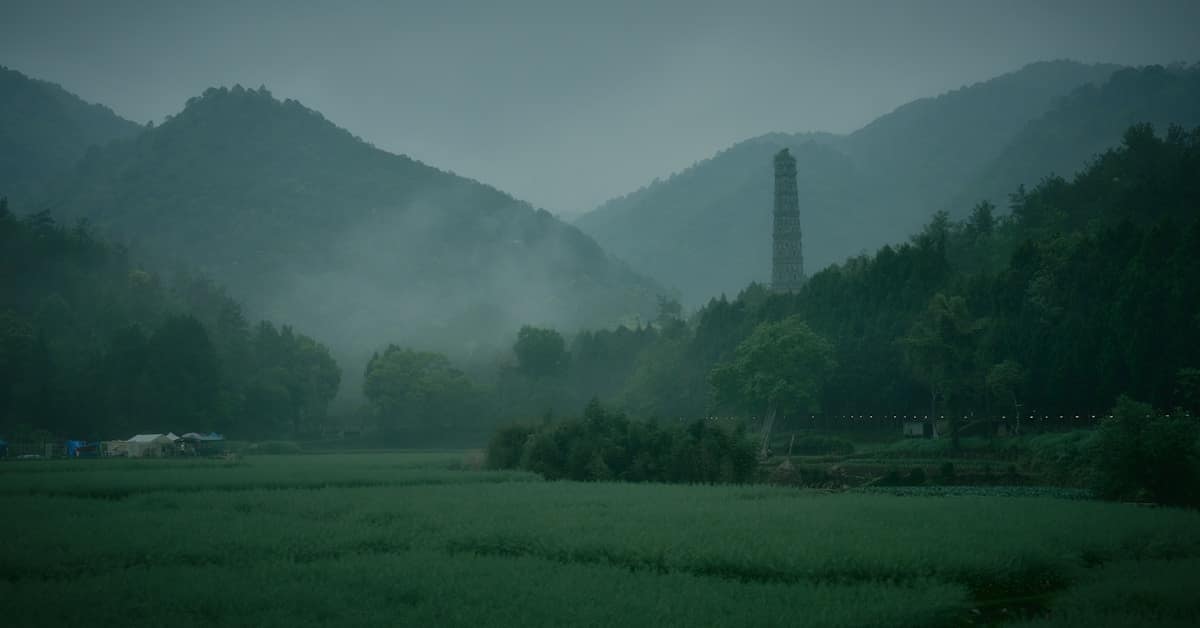
The next morning I caught a bus from Huangguoshu to Xijiang Qianhu Miao Village — four hours on winding mountain roads, 80 yuan. The village is the largest Miao settlement in China, with wooden houses stacked up the hillside like a vertical neighborhood. When the bus pulled in, I could see it from the road: dark timber buildings with tiled roofs, smoke rising from chimneys, and a river running through the valley floor.
The entrance fee was 100 yuan. I know, another ticket. Guizhou’s scenic spots charge for everything, and it adds up. But Xijiang does something with that money — the paths are well-maintained, the public toilets are clean, and the evening lighting turns the whole hillside into something that doesn’t look real.
What I Did Wrong
I stayed on the main street for the first two hours. Mistake. The main drag is all souvenir shops and overpriced restaurants with English menus and waiters standing outside waving at you. The actual village — the part where people live and cook and hang laundry — is up the side paths. I found this out around 3pm when I followed a narrow stone staircase behind a tea shop and ended up in a residential area where an old man was repairing a bamboo basket on his doorstep. He looked up, nodded, went back to work. No gift shop. No ticket booth. Just a guy making baskets.
The high viewing platform on the opposite hill is worth the climb. It’s a 20-minute walk up, and the view at dusk — thousands of lights turning on in the wooden houses as the sky goes dark — is the photo that everyone comes for. I shared the platform with about 200 other people and their phone screens. It was still worth it.
The Sour Soup Epiphany
I need to talk about the food separately because it surprised me. Guizhou cuisine doesn’t have the fame of Sichuan or Cantonese cooking, and that’s exactly why it hits harder — no expectations, no preconceptions. The sour soup I’d had at the guesthouse was just the beginning.
In Xijiang, I found a tiny restaurant — six tables, no sign, just a pot of something boiling behind a glass counter — and ordered by pointing. What arrived was a bowl of noodles in a red broth with pickled vegetables, ground pork, and a scoop of chili oil that I could smell from across the table. The noodles were hand-pulled, uneven in thickness, and perfect. 18 yuan. I ate the whole thing, ordered a second bowl, and the owner laughed at me in a way that felt like a compliment.
Guizhou’s sour flavor isn’t like vinegar sour. It’s fermented sour — the kind that makes your mouth water before the food even reaches it. The region’s cooks use fermented rice, fermented tomatoes, and pickled chilies to build layers of acidity that Sichuan food never touches. If you want to understand how this fits into the broader map of Chinese cooking, the regional food guide puts Guizhou’s sour-soup tradition in context.
Zhaoxing: The Village I Almost Skipped
The Long Road Southeast
Day three. I took a bus from Xijiang to Zhaoxing, a Dong ethnic village in southeastern Guizhou. The journey was supposed to take five hours. It took seven. The road was under construction in three separate sections, and each time we stopped, the driver got out, smoked a cigarette, chatted with the construction workers, and eventually we’d roll forward. Nobody seemed annoyed. This is just how things work in Guizhou.
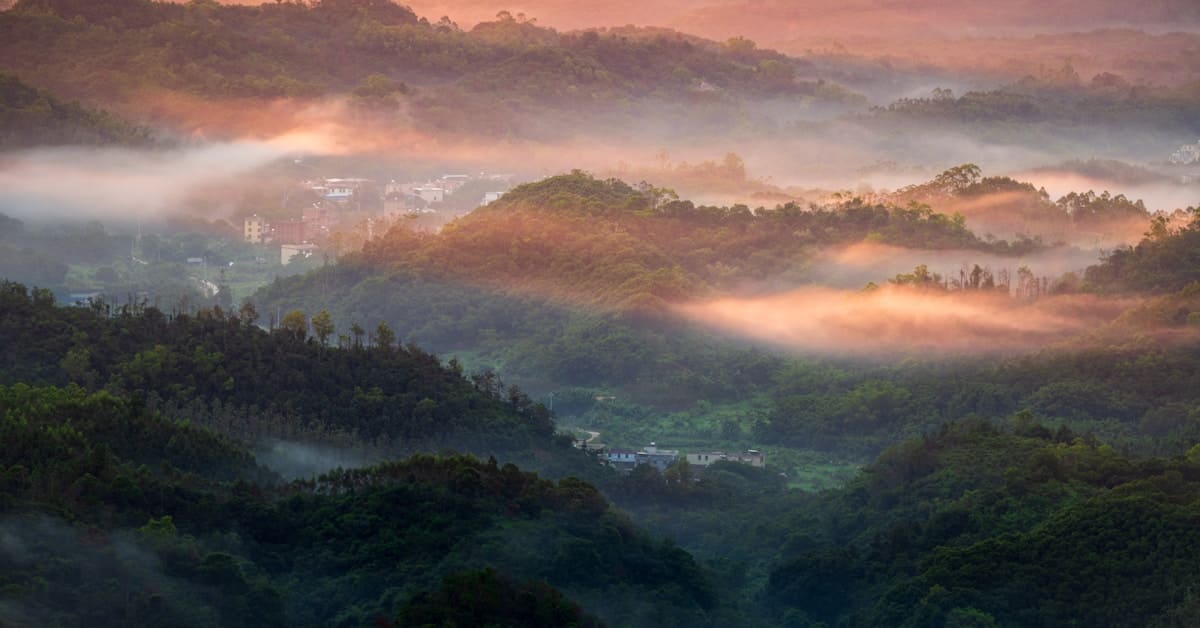
The extra hours were not wasted. The road cut through karst valleys that looked like the set of a wuxia film — vertical limestone peaks sticking out of green fields, rivers running silver at the bottom, and small villages with drum towers visible from the highway. I pressed my face against the window the entire ride.
Wind and Rain Bridges
Zhaoxing is known for its drum towers and covered bridges — the Dong people build these structures without a single nail, using interlocking wooden joints. The main bridge spans the river at the village center, and it functions as a gathering space: old men play cards, women sell vegetables, teenagers scroll their phones. I sat on a bench for an hour watching a card game I couldn’t follow and eating a sweet rice cake I’d bought from a cart for 3 yuan.
The village has no entrance fee. This fact alone made me like it more than Xijiang. It’s also quieter — fewer tour groups, fewer souvenir shops, more evidence that people actually live here. Rice drying on tarps in the square. A man sharpening a knife on a stone. A dog sleeping in the middle of the path who refused to move for anyone.
I stayed in a Dong-style wooden house — 90 yuan, shared bathroom, mattress on the floor. The bathroom had a squat toilet and a shower head mounted directly above it, which is the standard rural Guizhou arrangement. The water was hot. That’s all I needed.
Leaving Guizhou
I left on the 6pm bus to Guiyang, legs stiff from three days of walking on stone paths and uneven stairs. My shoes still hadn’t fully dried from the waterfall cave. I had a plastic bag of sour plums that the guesthouse owner in Tianlong had pressed into my hands as I left, refusing payment. I ate them on the bus — sharp, salty, and weirdly addictive.
Guizhou doesn’t have the international profile of Yunnan or the food fame of Sichuan. It probably never will, and that’s fine. The roads are bad, the buses are slow, the infrastructure is still catching up. But three days cost me under 800 yuan including everything — transport, food, tickets, accommodation — and I ate the most interesting food I’d had in months. If you’re looking for the kind of China that doesn’t show up on package tour itineraries, this is it. The villages guide covers a few other corners that operate on this same wavelength.
Photos courtesy of Unsplash
If Guizhou’s pace appealed, these three pair with it: