

The Table Was Set Before Dinner Was Finished
We were still eating when the uncle started clearing dishes from one end of the table. Not stacking them in the kitchen — pushing them to the side, making room, wiping the surface with a damp cloth. I was a guest in my friend Wei’s family home in a small city outside Nanjing, and it was the second night of a three-day weekend visit. The first night had been dinner and TV. The second night was mahjong.
The tiles came out of a cardboard box that had been stored under the couch. Not an automatic table — this was a manual set, old, the surface of the tiles worn smooth from years of hands. Wei’s mother, Wei’s uncle, Wei’s aunt, and — because there needed to be four — me.
Wei herself sat on the couch behind her mother, watching and offering commentary that was ignored entirely. “She always says I play wrong,” Wei whispered to me. “That’s why they never let her sit in.”
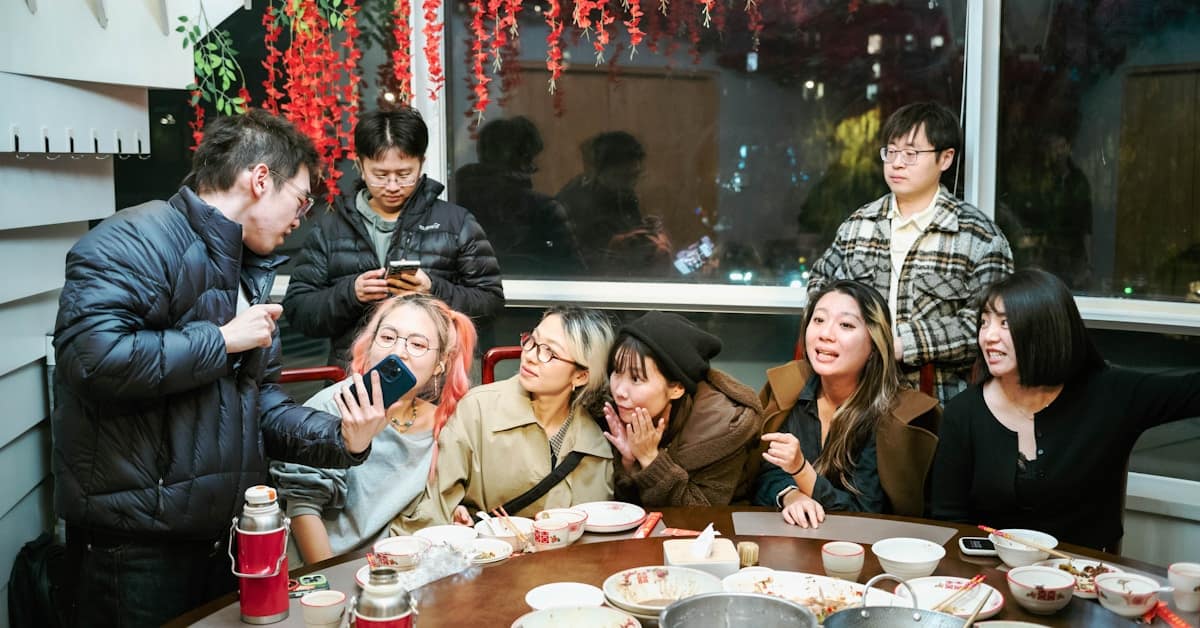
The Seating Arrangement Was Not Random
I sat where I was told. Later, Wei explained that the uncle had chosen the seat facing the door — the position of the host, or the most senior player. Her mother sat to his left. The aunt across from him. And me, the foreigner, to his right. This was the least competitive position at the table. I didn’t know that at the time.
The variant was Jiangsu mahjong — similar to Shanghai rules, with flower tiles that give bonus points. I’d played Sichuan mahjong before, in a park in Chengdu, but Jiangsu rules were different enough that I had to ask about the flower tiles twice. The aunt explained by pointing at the tile, then pointing at the ceiling — meaning it was a bonus, a gift from above, free points. The uncle nodded. Wei’s mother looked at me with the expression of someone who already knew this was going to be a long evening.
The First Five Rounds: Losing the Normal Way
I lost the first five rounds cleanly. No one was going easy on me — I simply didn’t have the skill to compete. My hands were a mess of half-matched tiles, and by the time I saw a winning combination, someone else had already declared hu.
The stakes were small: 2 yuan per base point. After five rounds, I was down about fifteen yuan. The uncle was up. The aunt was roughly even. Wei’s mother was down slightly. The money moved around the table in crumpled bills, no WeChat Pay here — this was a family game, and family games run on cash that stays in the family.
Between rounds, the conversation covered topics I couldn’t follow — relatives I didn’t know, neighborhood gossip, a property dispute I gathered was ongoing. When they remembered I was there, they asked me simple questions. Did I like Nanjing. Was the food too oily. Was I married. I answered honestly on the first two and dodged the third.
The Tea Break
After round five, Wei’s mother made tea. Longjing, from a tin in the kitchen cabinet. Small cups, refilled constantly. The uncle lit a cigarette and smoked it in two long drags. The aunt went to the bathroom. I sat at the table looking at the tiles, trying to memorize the flower tile system, which I still didn’t fully understand.
Wei sat next to me and quietly told me to discard my isolated tiles first — the ones that didn’t match anything. “Keep pairs and sequences,” she said. “Even bad ones. They’re more useful than single tiles.” This was the most useful advice anyone gave me all night, and it came from someone who wasn’t even playing.
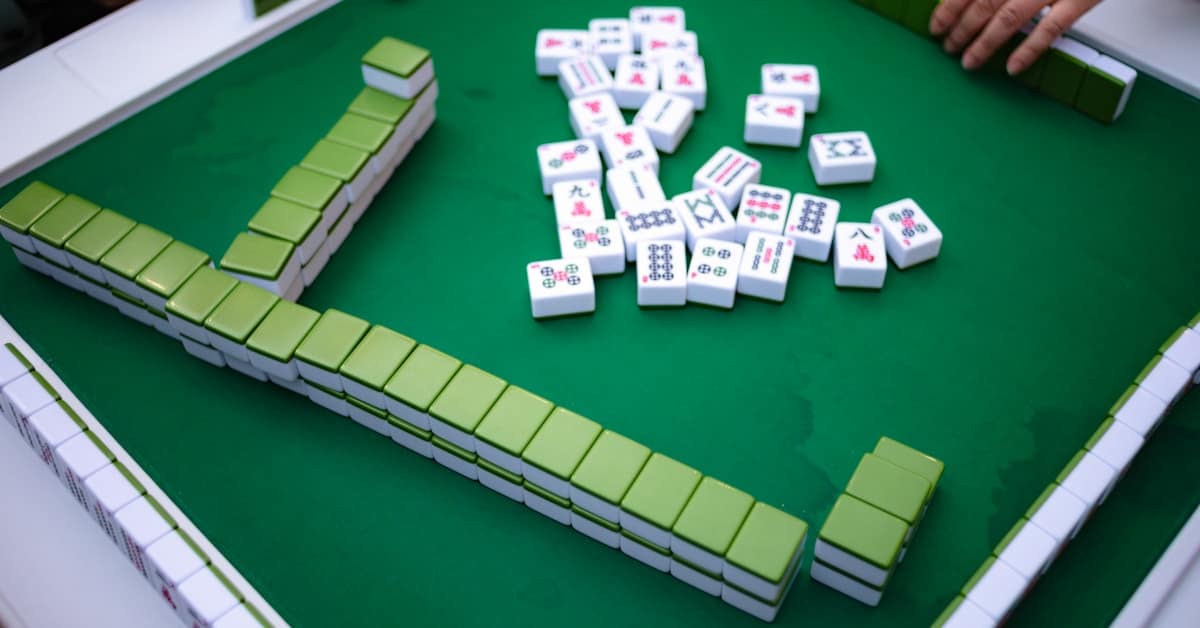
Round Six: The Win That Felt Wrong
I won round six. A clean hand — three pongs and a chow plus a pair. I declared hu and laid it down, and for a moment everyone was quiet. Then the uncle said something approving and pushed six yuan toward me. The aunt clapped once. Wei’s mother looked at my hand, then at the uncle, then back at my hand.
I didn’t think about it at the time.
I won round eight too. And round eleven. By round eleven, I was up twenty yuan, which was more than I should have been winning with the hands I was holding. I was getting better — Wei’s advice was helping — but I wasn’t getting that much better. I was still making basic mistakes: holding onto useless tiles too long, missing claiming opportunities, sometimes forgetting whose turn it was.
The Discard I Should Have Caught
Round twelve. The uncle discarded a tile — a 7 of characters — that completed my hand. I saw it. I said “Hu.” I won again.
But here’s the thing: the uncle had been building a hand himself. I could see part of it because he’d laid down a kong of 3-dots earlier. His remaining tiles were arranged neatly, and the 7 of characters didn’t belong in his discard pattern. He’d been holding characters all game. He didn’t need to discard that particular tile at that particular moment.
I realized this about three rounds later, when Wei leaned over and whispered: “My uncle is letting you win.”
The Unspoken Rules I Was Breaking Without Knowing
Wei explained it to me in the kitchen while I was getting water. Family mahjong has rules that aren’t about the tiles. They’re about the relationships around the table.
Rule one: the host doesn’t win big. The uncle was the host — it was his house, his tiles, his table. A host who wins consistently at his own table is seen as taking advantage of guests. So he loses on purpose. Not obviously, not every round, but enough to keep the mood light.
Rule two: the guest wins at least once. I was a guest. A foreign guest, specifically — the first one to sit at this table, possibly ever. For me to leave the table a net loser would have been embarrassing for the family. So the uncle made sure I won. Not by cheating, but by discarding tiles he knew I needed, at moments when my hand was close to complete.
Rule three: the mother-in-law never loses too much. The aunt was Wei’s mother’s sister-in-law, and the dynamic between them was the one I understood least — a layer of forced warmth over what Wei described as “thirty years of small disagreements.” The uncle managed the money flow to keep the aunt from losing more than ten yuan in any session. Not because she couldn’t afford it, but because losing face at a family table compounds.
What I Did With This Information
I went back to the table and I kept playing. What else was I going to do? Confront the uncle about letting me win? Refuse the money? That would have been worse — it would have meant I didn’t understand the system at all.
Instead, I started paying attention to how he played. The uncle was good — genuinely good. He could read the table by tracking discards, and he knew what each player needed before they knew it themselves. That’s how he could feed me the right tiles while still maintaining the appearance of playing seriously. He was playing a game I couldn’t see, on top of the game I was trying to learn.
I won two more rounds that night. After each one, I thanked him in Mandarin — xie xie — and he nodded. I think he knew I’d figured it out. I think he was okay with that.
The Last Round and the Kitchen Cleanup
We played until about 10:30. The final tally: I was up eighteen yuan. The uncle was down thirty. The aunt was down eight. Wei’s mother was up twenty — which, given the rule about the mother-in-law, was probably also managed.
Wei’s mother started washing the teacups. The aunt and uncle left — they lived in the same building, one floor down. The uncle shook my hand at the door and said, in English, “Next time.” His first English word of the evening.
I helped Wei’s mother dry the cups. She asked me if I’d had fun. I said yes. She asked if I wanted to play again tomorrow. I said yes. She said, “Good. Tomorrow, no letting you win.” She said it in Mandarin and I understood every word.
I gave the eighteen yuan back before I left the kitchen. She didn’t refuse it, but she put it in a drawer instead of her pocket. I saw her do it. I think it’s still there, waiting for the next game.