
Summer in China runs from June through August, and here is the honest truth: it gets hot. Really hot. Most of the country sits at 30-40°C (86-104°F) with humidity that makes you sweat through your shirt before you leave the hotel. But that does not mean you should skip China in summer. It means you need to know where to go, when to go there, and how to work around the weather instead of fighting it.
What Summer in China Actually Feels Like
The North (Beijing, Xi’an, Pingyao)
Hot and dry. Daytime temperatures in Beijing regularly hit 35°C (95°F) in July. Xi’an is worse — the city sits in a basin that traps heat. The saving grace: mornings and evenings are pleasant, and air conditioning is everywhere. Plan your outdoor sightseeing for 7-10am, spend midday indoors (museums, restaurants, shopping malls), then head back out after 5pm.
The South (Guangzhou, Shenzhen, Guilin)
Hot and wet. This is the monsoon season. Expect temperatures around 32-35°C (90-95°F) with 80-90% humidity. Rain comes hard and fast — a downpour at 2pm, then sunshine by 3pm. Carry an umbrella everywhere. The upside: southern China is one of the cheapest regions to travel in summer because fewer domestic tourists visit.
The West (Chengdu, Chongqing, Kunming)
Chongqing is famously one of China’s “furnace cities” — it regularly tops 40°C (104°F). Chengdu is cooler but muggy. Kunming, though, is the outlier. Known as the “Spring City,” it stays around 22-25°C (72-77°F) year-round. If you want a Chinese summer without the misery, head to Kunming and work your way toward Chongqing when you are ready for the heat.
Typhoon Season
The southeast coast (Shanghai, Fujian, Hainan) gets typhoons from July through September. Most are mild — a day of heavy rain and wind, then back to normal. But occasionally a big one shuts down trains and flights for 2-3 days. Download the China Weather app (available in English) and keep an eye on typhoon warnings if you are on the coast.
The 6 Best Places to Visit in China in Summer
1. Kunming and Dali, Yunnan
Kunming averages 22°C in July. That alone makes it worth the trip. From Kunming, take the two-hour train to Dali — a laid-back town between mountains and a lake where you can rent a bike, ride along Erhai Lake, and actually enjoy being outside at noon. Our 7-day Yunnan itinerary covers the full route from Kunming through Dali to Lijiang.
2. Zhangjiajie, Hunan
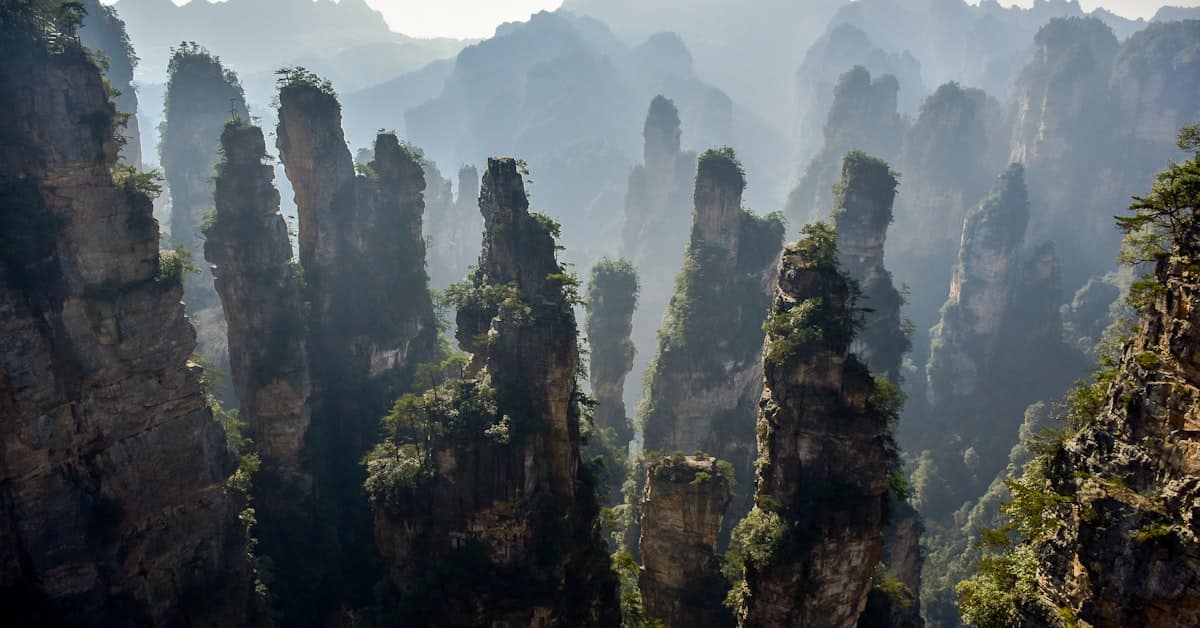
The pillar mountains that inspired Avatar stay around 28°C at the top — noticeably cooler than the cities below. The catch: it is peak domestic tourist season. Book tickets for Zhangjiajie National Forest Park at least a week ahead, and arrive before 7am if you want the glass bridge to yourself.
3. Qingdao, Shandong
A coastal city that maxes out around 28°C in August. Qingdao has beaches, German colonial architecture, and China’s most famous beer (Tsingtao — the city’s old name). The Qingdao International Beer Festival runs in August, and it is exactly as chaotic and fun as it sounds.
4. Guizhou Province
Almost nobody visits Guizhou, which is a shame because it has karst scenery to rival Guilin, dozens of ethnic minority villages, and summer temperatures that rarely exceed 30°C. Huangguoshu Waterfall — the largest in Asia — is at its most powerful in July and August after the rains.
5. Harbin, Heilongjiang
Yes, the Ice Festival city. In summer, Harbin stays around 26°C — the coolest major city in China. The Russian architecture, the riverside promenade, and the absence of winter crowds make it a surprisingly good summer destination. The train from Beijing takes about five hours on the high-speed line.
6. Sanya, Hainan
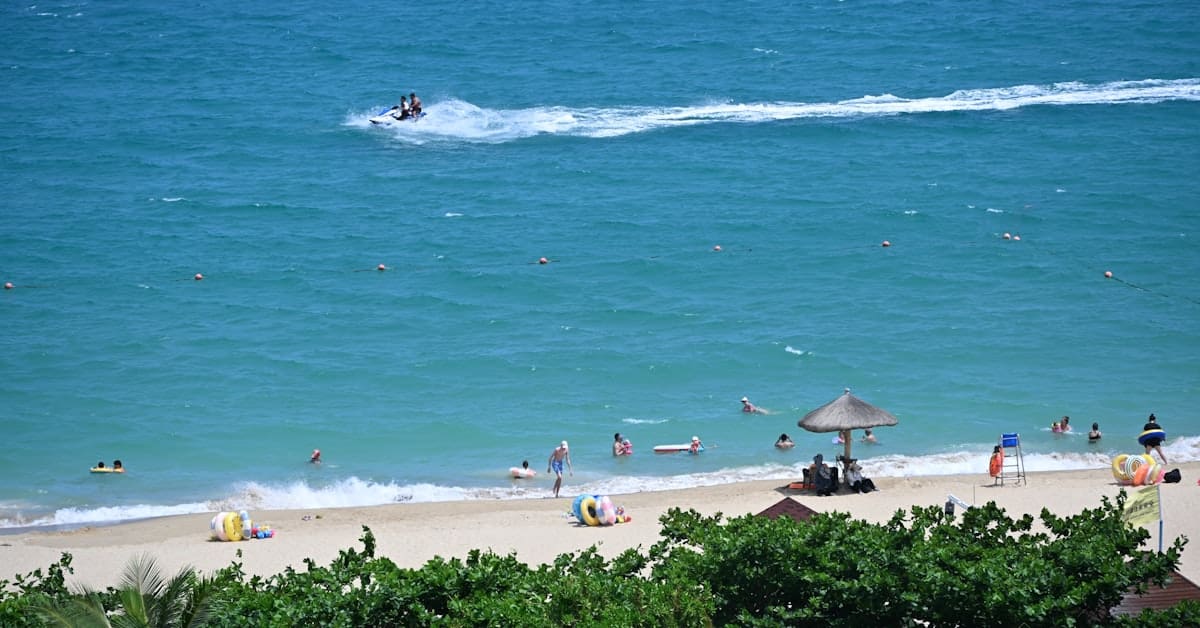
China’s tropical island. It is hot (32-35°C) but you are never far from the ocean. Sanya is where Chinese tourists go for beach holidays — think Hawaii but at a third of the price. Avoid late August if you do not want typhoon risk.
How to Beat the Heat: Practical Tips
Shift Your Schedule
Chinese people have this figured out. They do their outdoor activities early and late, and spend the middle of the day indoors. You should too. Visit temples and parks at opening time (usually 8am), have a long lunch, take a nap or visit a museum at 1-4pm, then head back out after 5pm. Night markets in China are some of the best evening activities — and they are where you will find the most authentic regional food.
Air Conditioning Is Everywhere
Every hotel, restaurant, shop, and museum in China has air conditioning. The subway is aggressively air-conditioned (bring a light jacket). Malls are cold enough to store meat. You will not suffer indoors — the challenge is the 10-minute walk between air-conditioned spaces.
Hydration
Tap water is not drinkable in China. Buy bottled water from convenience stores (Family Mart, 7-Eleven, Lawson — they are on every block in cities). A 500ml bottle costs ¥2-3 ($0.30-0.40). Better yet, carry a thermos and fill it with free hot or cold water available at every train station and most hotels. The Chinese tradition of drinking hot water even in summer is not just cultural — it genuinely helps your body regulate temperature better than ice-cold drinks.
What to Wear
- Lightweight, breathable fabrics — linen or thin cotton. Avoid heavy synthetics.
- A hat with a brim — you will see most Chinese women carrying parasols, and they have the right idea.
- Comfortable walking sandals — shoes that can handle rain and still look presentable in temples.
- A light jacket or cardigan — for the freezing air conditioning on trains and in malls.
- A compact umbrella — double duty for sun and rain.
Summer Travel Logistics
Train Tickets
Summer is peak travel season for Chinese families (school holidays run July-August). Book high-speed train tickets the moment they become available — 15 days before departure on 12306.cn or the Trip.com app. The popular routes (Beijing-Shanghai, Chengdu-Chongqing, Shanghai-Hangzhou) sell out fast on weekends.
Hotel Prices
Expect a 30-50% price increase at tourist hotspots in July and August. Budget hotels in second-tier cities (Kunming, Guiyang, Harbin) stay reasonable at ¥150-250 per night. Coastal cities and resort areas (Sanya, Qingdao) get expensive — book early or travel in June when prices are lower.
What to Avoid
- The first week of July — schools finish exams, and every family in China starts traveling. Stations and attractions are packed.
- Outdoor attractions at midday — the Great Wall at 1pm in July is a miserable experience. Go at 7am or after 4pm.
- Guangzhou and Shenzhen in July-August — unless you enjoy the feeling of walking into a hair dryer.
A 10-Day Summer Itinerary
Days 1-2: Beijing
Do the Great Wall at Mutianyu early morning (6:30am departure from the city). Spend afternoons in the Palace Museum or National Museum — both are air-conditioned. Evening: Houhai lake area for dinner and drinks.
Days 3-4: Xi’an
High-speed train from Beijing (4.5 hours). Terracotta Warriors first thing in the morning. Evenings on the City Wall — rent a bike and ride the 14km circuit as the sun sets.
Days 5-6: Chengdu
Fly from Xi’an (1.5 hours). Panda base at 7:30am. Afternoon: teahouse in People’s Park. Evening: hotpot in a restaurant with AC cranked to maximum.
Days 7-8: Kunming
Fly from Chengdu (1.5 hours). Enjoy the 22°C weather. Stone Forest day trip. Evening: Nanqiang Street for crossing-the-bridge noodles.
Days 9-10: Guilin/Yangshuo
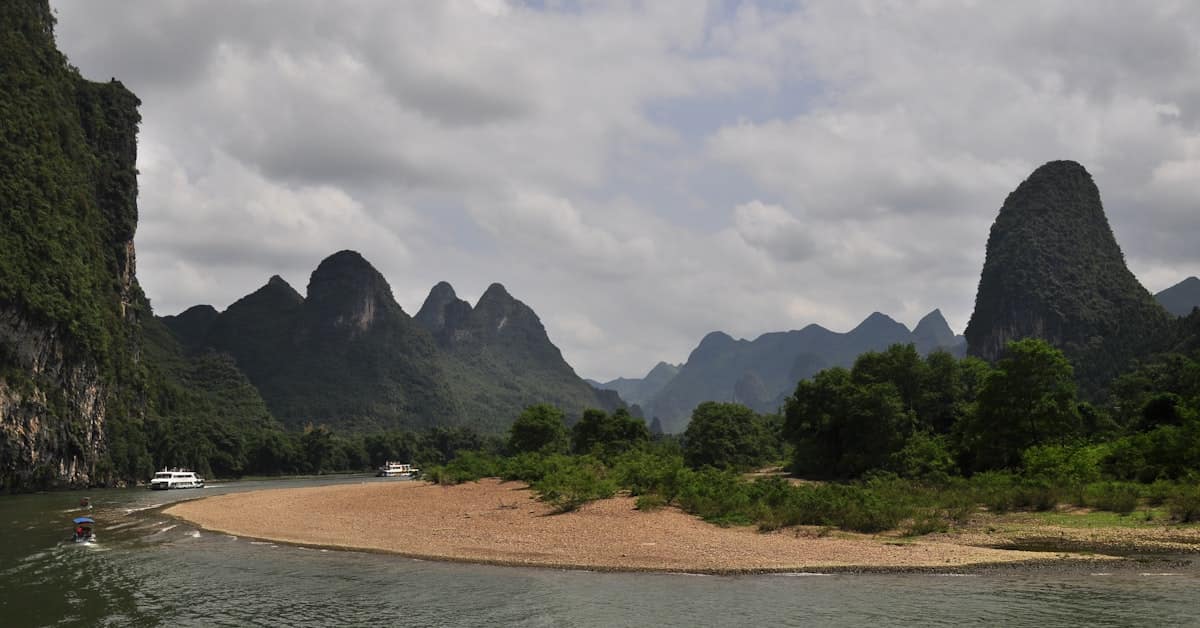
High-speed train from Kunming (5 hours). Li River cruise at dawn. Afternoon: bamboo rafting in Yangshuo. This is what summer in China looks like when you pick the right places.
Photos courtesy of Unsplash
